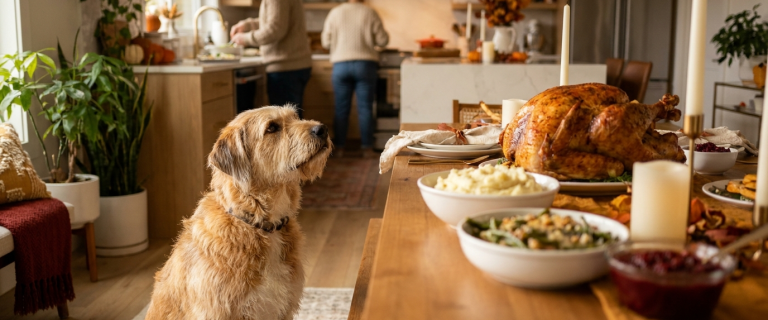
If you’ve ever carved a turkey with a dog parked at your feet, you know the stare. Total focus. A small puddle of drool on your sock.
Handing down a drumstick can feel like the nicest holiday gesture in the world. It’s a hard no, though. Cooked turkey bones get brittle and can splinter, and that goes for every bone on the bird, whether it was roasted, smoked or fried.
Below I’ve covered why, which bones count, what to share instead and the simple habits that keep bones away from your dog on the day itself, from the carving board to the trash can.
Quick answer
No. Cooked turkey bones are never safe for dogs. Cooking makes bones brittle, so they can splinter into sharp pieces that may get stuck in the throat, stomach or intestines, or injure the gut on the way through (FDA). That includes drumsticks, wings, necks, the wishbone and the carcass, whether the bird was roasted, smoked or fried. Share plain, boneless turkey meat instead. If your dog already ate a bone, call your vet now, even if they seem fine.
Already Ate a Turkey Bone?
Stay calm, and call your vet even if your dog seems completely fine. A bone can cause trouble before you see any signs.
Then gather three details. They’re the first things a vet or poison line will ask:
- Which bone, such as a leg bone, neck, wishbone or pieces of the carcass, and whether it was roasted, smoked or fried.
- How much, and roughly when.
- Your dog’s weight.
Then call. Don’t wait for symptoms.
Your own vet
Call first. If they’re closed, call the nearest emergency vet clinic.
Don’t make your dog throw up unless a vet or poison line tells you to.
The poison lines above are for anything toxic that came with the bone, like stuffing or drippings with onion and garlic. Skip home remedies you find online and let your vet guide you.
Regular vet closed for the holiday? See our best telehealth vets for dogs.
The good news is that nearly all bone trouble is preventable with a few habits on the day. Below you’ll find every part of the bird at a glance, why cooked bones are risky, a bone-by-bone rundown and the prevention checklist I’d use.
For the rest of the holiday table, see our full guide to Thanksgiving foods dogs can and can’t eat.
Which Parts of the Turkey Can Dogs Eat?
Green means fine in small, plain amounts for most healthy dogs. Amber means skip it. Red means no.
Every bone on the bird lands in the red “never” bubble, and the reason is the same each time: cooking. The meat is the dog-friendly part, as long as it comes off the bone plain.
Why Are Cooked Turkey Bones Dangerous for Dogs?
Cooking makes bones brittle, so they break into sharp splinters instead of chewing down. The FDA warns that turkey and chicken bones are too brittle for dogs and splinter easily. The ASPCA lists poultry bones as a choking hazard and notes that bones can injure or block the digestive tract.
- Choking. A piece can lodge in the throat or the windpipe.
- Getting stuck. Pieces can get stuck in the esophagus, stomach or intestines and cause a blockage.
- Sharp edges. Splinters can injure the mouth or the gut on the way through.
Let’s be honest, plenty of people know a dog who ate a turkey bone and was fine. That dog got lucky, and luck is a lousy plan for a holiday weekend when your regular vet may be closed.
Can Dogs Eat Turkey Leg Bones or Drumsticks?
No. Drumsticks and leg bones are a no, and so is every other bone on the bird. People sometimes assume the big leg bone is safer because it’s so thick. Once it’s cooked, it splinters like the rest. Here’s how each part shakes out:
- Drumsticks and thigh bones: thick but brittle. A guest’s half-eaten drumstick on a low plate is the classic grab.
- Wings: small, thin bones that are easy to gulp before your dog even chews.
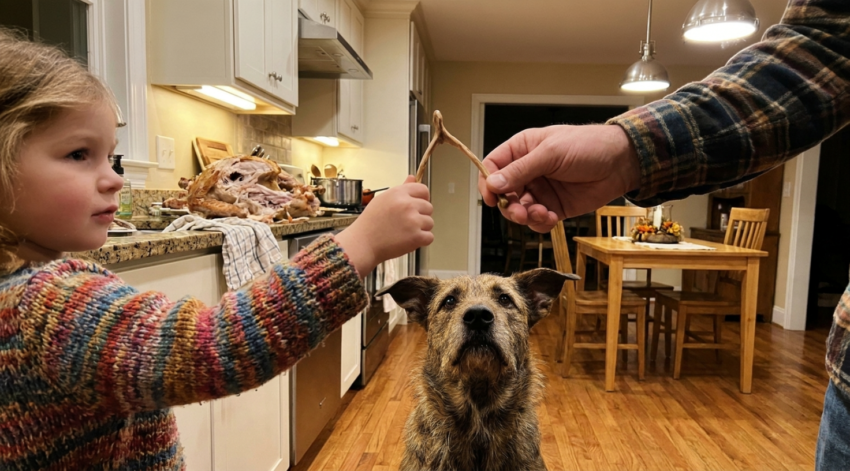
- The wishbone: small and sharp when it snaps. Make the wish, then bin it.
- Neck bones: a column of small bones. Cooked necks are a no (raw necks are covered in the next section).
- The carcass: every bone at once, plus fat and seasoning. This is the one dogs go looking for in the trash.
Are Small Turkey Bones Safe for Dogs?
No. Small doesn’t mean safe. A small cooked bone is just as brittle as a big one, and wings, the wishbone, and neck bones are all small. Size doesn’t change what cooking does to a bone.
What About Smoked, Fried or Raw Turkey Bones?
Smoked and fried turkey bones count as cooked, so they’re a no too. Any cooking method that heats the bone through makes it brittle. If you’re deep-frying a turkey this year (brave), the bones from that bird get the same trash-can treatment as a roasted one.
Raw bones are a different conversation. The FDA advises against giving dogs bones in general. Some raw feeders do give raw turkey necks, and if that’s something you’re curious about, I’d talk it through with your own vet, who knows your dog’s health and chewing style.
How Do I Keep Turkey Bones Away from My Dog on Thanksgiving?
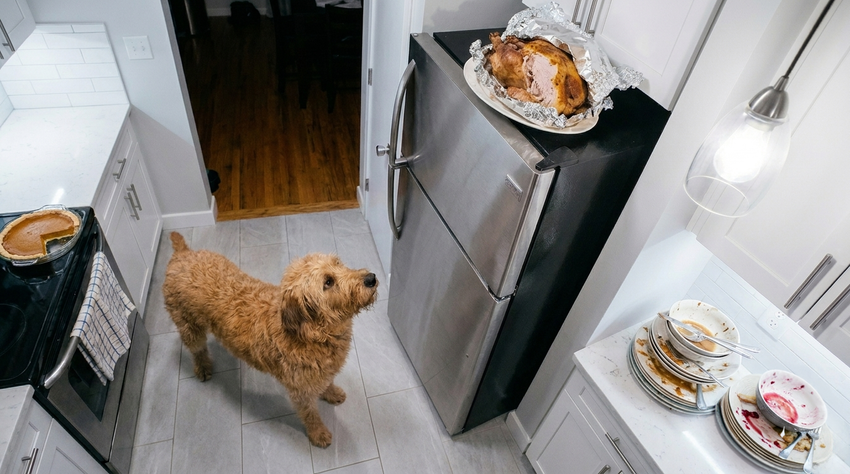
Plan for the bones before the bird comes out of the oven. Most bone trouble doesn’t happen at the table. It happens at the carving board, on a guest’s plate or in the kitchen trash after everyone has gone to bed. The FDA recommends putting bones in a trash bin your pet can’t get into (FDA).
01
Carve back from the edge
Push the cutting board to the back of the counter, and keep counter-surfers out of the kitchen while you carve.
02
The carcass goes outside, today
Bag it and take it straight to a lidded outdoor bin, not the kitchen can. Same for any bones scraped off plates.
03
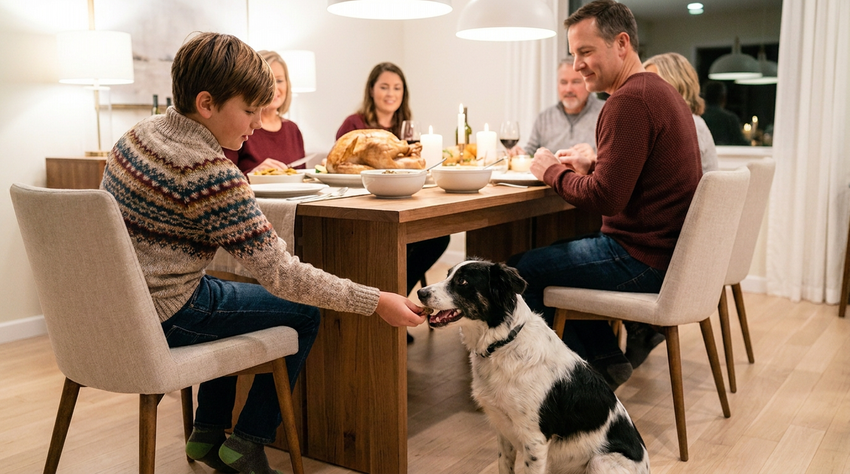
Tell guests “no bones”
Kids especially. Hand them a few dog treats instead, so they still get to be the fun one.
04
Leftovers go up high
Sealed containers on a high fridge shelf, including any bones you’re saving for soup.
Two more to watch: plates left on the coffee table at nose height, and the turkey string, foil and oven bags, which are soaked in drippings and smell exactly like dinner.
Can Dogs Have Turkey Bone Broth?
Yes, homemade turkey broth is the safe way to share the bone flavor, as long as every bone is strained out. Simmer the carcass in plain water, skip the onion, garlic and salt that most soup recipes call for, then strain it carefully and skim off the fat once it cools.
Store-bought broth and bouillon are a different story. They’re usually salty, and the ASPCA flags bouillon as very high in sodium. Many also contain onion or garlic, so read the label (ASPCA).
The safe way to share: a drizzle of plain homemade broth over their regular food, or use it as the base for our homemade dog gravy recipe, which keeps the onion, garlic and salt out.
What Can My Dog Have Instead of a Turkey Bone?
Plain, boneless turkey meat is the holiday treat, and a dog-safe chew covers the urge to gnaw. Pull a few pieces from the inside of the breast before the bird gets buttered and seasoned, and set them aside on a dog-only plate.
If what your dog really wants is something to work on while everyone eats, give them their own chew in a quiet room. Here’s our guide to safer bones and chews and our take on bully stick safety. Ham bones follow the same rules as turkey bones, and our Thanksgiving foods guide covers the ham itself.
Before the Turkey Comes Out
Carve back from the edge, get the carcass outside the same day and give your dog the plain meat plus a chew of their own. Save your vet’s number and the nearest emergency clinic in your phone before the holiday, and if a bone ever goes missing into a dog, call right away, even if they seem completely fine.
Turkey Bones and Dogs: FAQ
Can dogs eat cooked turkey bones?
No. Cooked turkey bones are brittle and can splinter into sharp pieces that cause choking or get stuck in or injure the gut. That includes roasted, smoked and fried turkey.
Are turkey bones safe for dogs if they’re small?
No. Small cooked turkey bones are just as brittle as big ones. Wings, the wishbone and neck bones are all small, and all of them are a no.
Can turkey bones kill dogs?
They can cause serious injuries, which is why vets say never. If your dog ate one, call your vet now, even if they seem fine.
My dog ate a turkey bone. What should I do?
Call your vet right away, even if your dog seems fine, and don’t make your dog throw up unless the vet tells you to. Tell them which bone it was, about how much your dog ate, when it happened and your dog’s weight.
Can dogs eat turkey neck bones?
Not cooked ones. Cooked turkey necks are brittle like every other cooked bone. The FDA advises against bones in general, so talk to your own vet before offering raw necks.
Can dogs have turkey bone broth?
Yes, if it’s homemade with no onion, garlic or salt and every bone is strained out. Store-bought broth is often salty and may contain onion or garlic.
What part of the turkey can dogs not eat?
Dogs shouldn’t eat turkey bones, skin, fatty drippings or anything seasoned with butter, onion or garlic, including stuffing cooked inside the bird. Plain, boneless, skinless meat is the part to share.
Keep Reading
Sources
- U.S. Food and Drug Administration: Keep Your Dogs and Cats Safe From Holiday Hazards
- U.S. Food and Drug Administration: No Bones (or Bone Treats) About It
- ASPCA: Thanksgiving Safety Tips
- ASPCA Animal Poison Control: People Foods to Avoid Feeding Your Pets
This guide is educational and is not a substitute for veterinary advice. If you think your dog ate something harmful, contact your vet or a poison control line right away.