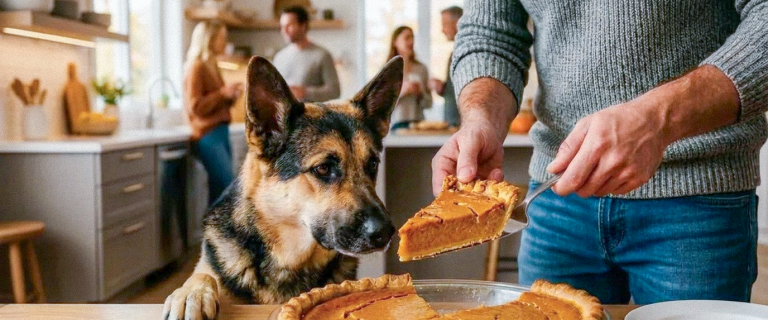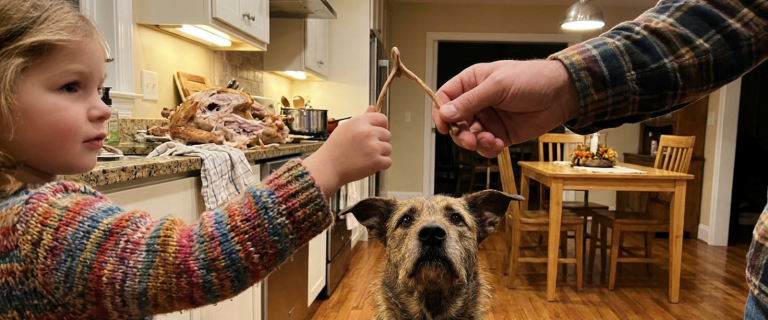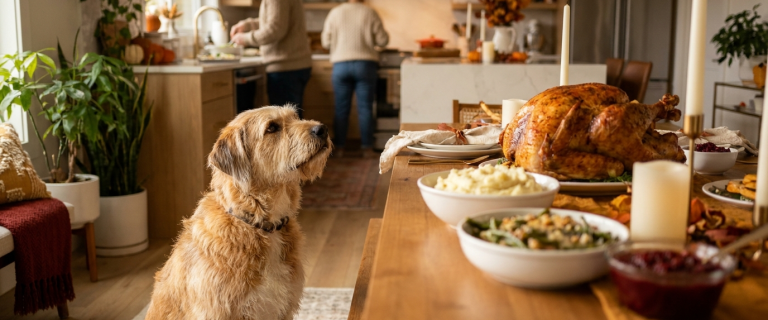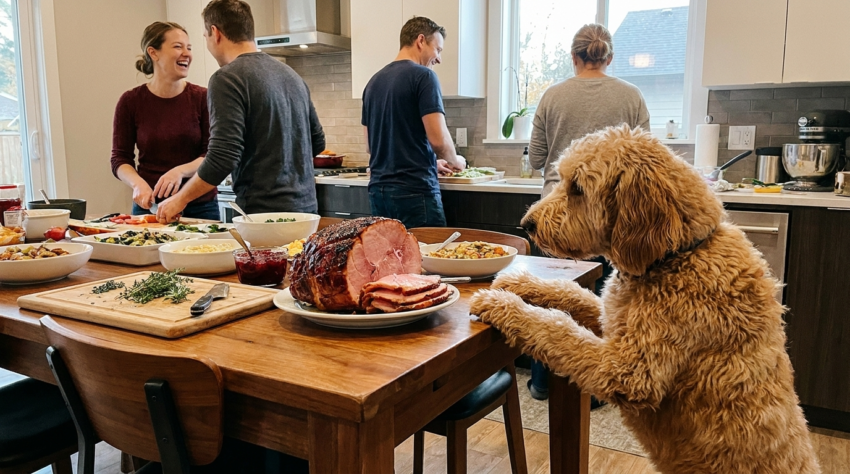
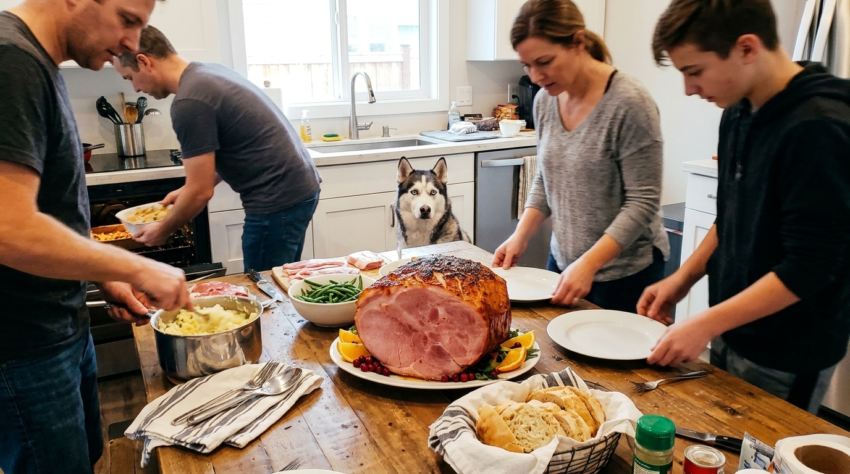
The ham comes out of the oven, the glaze is still bubbling, and every dog in the house suddenly remembers their very best manners. Sitting. Staring. Possibly drooling on your sock.
So, can dogs eat ham? It’s better to skip it. Ham is very salty and fatty, and holiday hams are usually glazed with sugar or honey. Ham bones can also splinter. A stolen bite of plain ham is unlikely to be an emergency for most healthy dogs, but it’s an easy way to end up with an upset stomach after the holidays.
I think of it as the three ham problems: salt, fat and glaze, with the bone as its own hard no. Below I’ve covered every kind of ham at a glance: the deli slice a friend handed over, honey-glazed holiday ham, the ham hock in your soup pot and what to do if your dog already helped themselves.
Quick answer
Better to skip it. Ham is very salty and fatty, and holiday hams are often glazed with sugar or honey. A small bite of plain ham is unlikely to be an emergency for most healthy dogs, but it can upset their stomach, and rich, fatty scraps are linked to pancreatitis. Ham bones are a hard no because cooked bones can splinter. Call your vet if your dog seems unwell or ate a ham bone, a lot of ham or the fat trimmings.
Already Ate Ham?
Check two things first. If either one happened, call now:
- Did they eat a ham bone or a ham hock? Cooked bones can splinter or get stuck.
- Did they eat a lot, like a big helping, the fat trimmings or the pan drippings?
Then gather three details. They’re the first things a vet or poison line will ask:
- What they ate, such as slices, fat, a bone, glazed ham or deli ham, plus the label if a sugar-free glaze was involved.
- How much, and roughly when.
- Your dog’s weight.
Then call. Don’t wait for symptoms.
Your own vet
Call first if they’re open.
Don’t make your dog throw up unless a vet or poison line tells you to.
Ate a cooked bone? Our turkey bones guide walks through what to do next, and the advice is the same for ham bones.
Regular vet closed for the holiday? See our best telehealth vets for dogs.
The good news is that most healthy dogs who snag a bite of ham are fine, and the worst they get is a sore tummy. Below you’ll find every kind of ham at a glance, why ham is harder on dogs than plain meat and a calm answer to “my dog ate ham, will he be OK?”
If your dog already got into the ham, jump to my dog ate ham. For the rest of the table, see our guide to Thanksgiving foods dogs can and can’t eat.
DogVills is reader-supported. If you buy through links on this page, we may earn a commission at no extra cost to you.
Ham for Dogs: Which Kinds Are Safe?
You won’t find any green rows here. Amber means skip it and don’t make it a treat. Red means no.
Every row comes back to the same three ham problems: salt, fat and glaze. The more cured, glazed or fatty the ham, the further down the table it lands, and anything with a bone in it is a never.
Why Is Ham Bad for Dogs?
Ham isn’t toxic, but it’s one of the saltiest, fattiest meats on the holiday table. Here are the three ham problems, one at a time:
- Salt. Ham is cured, which means it’s packed with salt. The ASPCA notes that too much salt causes increased thirst and urination, and much larger amounts can be dangerous.
- Fat. Rich, fatty scraps are linked to pancreatitis, a painful inflammation of the pancreas. The Merck Veterinary Manual lists eating large amounts of table scraps as a common risk factor in dogs.
- Glaze. Honey, brown sugar and maple glazes add sugar your dog doesn’t need. Sugar-free glazes need a label check for xylitol, which is dangerous for dogs.
Bacon has the same salt-and-fat story, and our guide to whether dogs can eat bacon explains why. For the foods that are truly off-limits, see our list of foods you should never give your dog.
Can Dogs Eat Honey Ham or Glazed Ham?
Skip it. The glaze is a big part of what makes holiday ham so good, and it’s mostly sugar, honey or syrup, often with butter and spice. That’s on top of the salt and fat already in the meat. Our guide to the effects of sugar in dogs covers why that matters.
If you’re using a sugar-free or “keto” glaze, check the label for xylitol before the ham goes anywhere near your dog. If your dog ate ham with a sugar-free glaze and you’re not sure which sweetener was in it, call your vet or a pet poison line.
Can Dogs Eat Deli Ham or Ham Slices?
One slice isn’t an emergency for most healthy dogs, but don’t make it a habit. Deli ham is cured and processed, so it’s salty even when it doesn’t taste especially salty to us.
This is the classic scenario: a friend or a well-meaning relative slipped your dog a few slices while you weren’t looking. If that happened, offer fresh water, keep an eye out for tummy trouble and call your vet if your dog seems unwell, or if they’re small and ate several slices. The same goes for a ham sandwich, where mustard, cheese and bread come along for the ride.
Can Dogs Eat Turkey Ham?
Skip it. Turkey ham is turkey that’s been cured and processed to taste like ham, so it’s salty in the same way. Plain, boneless roast turkey is a much better choice.
Can Dogs Have Ham Bones?
No, never a cooked ham bone. Cooked bones can splinter, and the FDA warns that bones can get stuck in a dog’s throat or windpipe, and sharp pieces can injure the mouth, esophagus and stomach.
Leftover ham bones usually end up in the kitchen trash, which is exactly where a determined dog will go looking. Wrap them up and put them in a bin with a tight lid, or take them straight outside. If your dog loves to chew, our tips on dog treat safety cover safer options.
What About the Ham Hock in the Soup Pot?
Keep it out of the dog bowl. A ham hock simmered in split pea soup or a pot of beans is still a cooked bone, and the broth around it soaks up the salt and fat. Many of those soups also start with onion and garlic, which can damage a dog’s red blood cells. Fish the hock out, toss it where your dog can’t reach it and skip sharing the soup.
My Dog Ate Ham. Will He Be OK?
Most healthy dogs who snag a bite of ham are OK. The most likely result is some extra thirst or an upset stomach. Offer fresh water and keep an eye on them.
Call your vet if your dog:
- Ate a ham bone or ham hock
- Ate a lot of ham, the fat trimmings or the drippings
- Is small, older or has had pancreatitis before
- Ate ham with a sugar-free glaze
- Seems unwell, with vomiting, diarrhea, a sore belly or no interest in food
Don’t make your dog throw up unless a vet tells you to. If your regular vet is closed for the holiday, a poison line or an emergency clinic can tell you whether your dog needs to be seen.
My Dog Ate Ham and Has Diarrhea. What Now?
Call your vet, especially if it keeps going, your dog is vomiting too or they seem uncomfortable. A rich, salty treat can upset a dog’s stomach, but diarrhea after fatty food can also be a sign of something more serious, like pancreatitis. Your vet can tell you whether to bring your dog in.
What Can I Give My Dog Instead of Ham?
Plain, boneless turkey or chicken is the easy swap. Pull a few pieces of plain meat aside before anything gets seasoned, glazed or buttered, and mix them into your dog’s regular food.
- Plain roast turkey, skinless and boneless, with no rub or butter
- Plain cooked chicken, with the same rules
- Plain veggies like green beans or a little plain sweet potato
The ASPCA suggests mixing a few pieces of turkey, sweet potato and green beans into your pet’s usual dinner, which is about as festive as a dog bowl needs to get. And if your dog clearly wants more real meat in their life, a complete fresh food is a better way to give it to them than ham off the table.
Want to Share Real Meat Without the Salt and Glaze?
A complete fresh dog food puts real meat and vegetables in your dog’s bowl, balanced for dogs, with none of the curing salt or sugary glaze.
Our pick for the holiday
Freshpet
Refrigerated fresh recipes made with real meat and vegetables. You’ll find them in grocery store fridges, and they’re also available for delivery.
DogVills is reader-supported. If you buy through links on this page, we may earn a commission at no extra cost to you.
Before You Carve the Ham
Keep the ham, the glaze, the fat trimmings and the bone for the humans, and give your dog a few pieces of plain turkey or chicken instead. When dinner’s done, get the bone into a sealed bin before anyone starts on the dishes.
Save both poison line numbers in your phone before the holiday: ASPCA Animal Poison Control at (888) 426-4435 and Pet Poison Helpline at (855) 764-7661.
Ham for Dogs: FAQ
Is ham bad for dogs?
Ham isn’t toxic, but it’s very salty and fatty, and holiday hams are often glazed with sugar. It’s better not to share it. A small bite is unlikely to be an emergency for most healthy dogs.
Why can’t dogs have ham?
Ham is cured with a lot of salt, it’s high in fat and it’s often glazed with sugar or honey. Fatty scraps are linked to pancreatitis, and cooked ham bones can splinter.
Can dogs eat cooked ham?
It’s best to skip it. Cooking doesn’t remove the salt or fat. Plain, boneless turkey or chicken is a better treat.
Can dogs eat ham bones?
No. Cooked ham bones can splinter and injure a dog’s mouth, throat or gut. If your dog ate a ham bone, call your vet.
My dog ate ham. Will he be OK?
Most healthy dogs who eat a bite of ham are fine, apart from some thirst or an upset stomach. Call your vet if your dog seems unwell or ate a bone, a lot of ham or the fat.
How much ham can I give my dog?
It’s best not to make ham a treat at all. If your dog got a bite, don’t panic. Watch for tummy trouble and call your vet if you’re worried.
Can dogs eat turkey ham?
Skip it. Turkey ham is cured and salty like regular ham. Plain, boneless roast turkey is a better choice.
What meat should dogs not eat?
Skip fatty, salty or heavily seasoned meats like ham, bacon, sausage and fat trimmings, plus any cooked bones. Plain, boneless, unseasoned meat is the safe way to share.
Keep Reading
Sources
- ASPCA Animal Poison Control: People Foods to Avoid Feeding Your Pets
- ASPCA: Thanksgiving Safety Tips
- U.S. FDA: Keep Your Dogs and Cats Safe From Holiday Hazards
- Merck Veterinary Manual (Pet Owner Version): Pancreatitis in Dogs
This guide is educational and is not a substitute for veterinary advice. If you think your dog ate something harmful, contact your vet or a poison control line right away.