Dogs should never eat chocolate, grapes or raisins, onions or garlic, xylitol, alcohol, caffeine, macadamia nuts, raw yeast dough or cooked bones. These are the foods that can make a dog seriously sick, and most of them land on the same holiday table at the same time.
I’ve put them all in one place so you can check fast, whether you’re planning ahead or standing in the kitchen with an empty cookie tray and a suspiciously happy dog. You’ll find the list at a glance, why each food is a problem, where they hide around the house at the holidays and what your dog can have instead.
Quick answer
Never give your dog chocolate, grapes, raisins, onions, garlic, xylitol, alcohol, caffeine, macadamia nuts, raw yeast dough or cooked bones. These can cause anything from vomiting to kidney injury, red blood cell damage or a blocked gut, according to the ASPCA. Many of them show up together at the holidays, so keep plates, gift boxes, drinks and the trash out of reach. If your dog ate any of them, call your vet or a poison line now. Don’t wait for signs.
Already Ate Something on This List?
Stay calm, and call now, even if your dog seems completely fine. Some of these foods cause trouble before you see any signs.
Have three details ready. They’re the first things a vet or poison line will ask:
- What it was. Grab the wrapper, label or recipe if you can.
- How much, and roughly when.
- Your dog’s weight.
Your own vet
Call first. If they’re closed, call the nearest emergency vet clinic.
Don’t make your dog throw up unless a vet or poison line tells you to. Skip home remedies you find online and let your vet guide you.
Regular vet closed for the holiday? See our best telehealth vets for dogs.
Foods Dogs Can’t Eat: The List at a Glance
Red means never. Amber means skip it. Tap a food’s name for its full guide where we have one.
Foods Dogs Should Never Eat
Each of these made the list for its own reason. None of them comes in a “just a little is fine” version, so if your dog eats any of them, call.
Chocolate
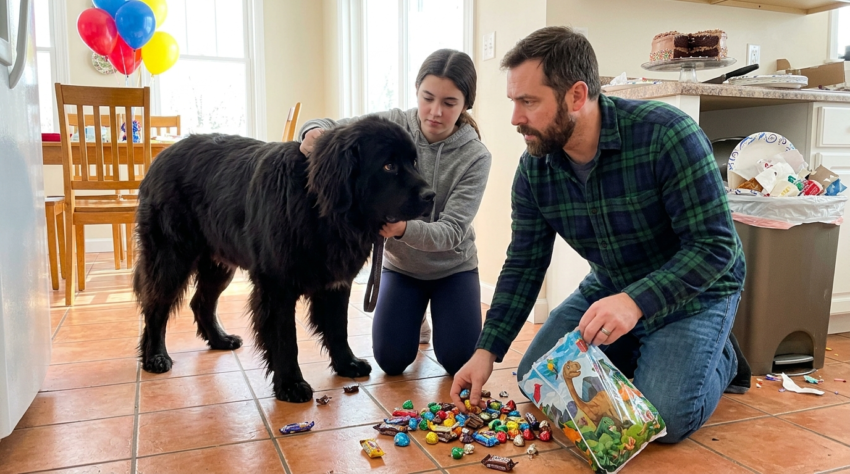
Chocolate contains compounds called methylxanthines, which the ASPCA says can cause vomiting, diarrhea and much more serious problems in pets. The darker the chocolate, the bigger the risk. The FDA warns that unsweetened and baking chocolate are especially dangerous. Gift boxes under the tree and stockings on low hooks are the classic holiday grabs. Want to bake something chocolatey for your dog? Carob is the dog-safe swap.
Grapes, Raisins and Currants
The Pet Poison Helpline says raisins can lead to kidney injury and kidney failure in dogs, and grapes carry the same risk. The suspected cause is a compound called tartaric acid, but it hasn’t been proven. With that much still unknown, treat any grape or raisin as a reason to call. At the holidays they hide in fruitcake, panettone, cinnamon rolls, stuffing, trail mix and cheese boards.
Onions, Garlic, Chives and Leeks
The whole onion family can irritate a dog’s stomach and damage red blood cells, according to the ASPCA. It doesn’t matter whether it’s raw, cooked, dried or powdered, so watch for it in gravy, stuffing, green bean casserole, soups and seasoning blends. If you’d like to share gravy, our homemade dog gravy recipe leaves the onion and garlic out.
Xylitol
Xylitol is a sweetener that the ASPCA says can cause low blood sugar and possibly liver damage in dogs. The FDA lists sugarless gum, breath mints, baked goods, sugar-free desserts, toothpaste and some peanut and nut butters among the products that may contain it. Read the label on ANY peanut butter before it goes in a dog treat (our peanut butter guide covers this).
Heads-up: guests’ handbags and coat pockets are where the sugar-free gum and mints live. Hang them up or put them in a closed room when people come over.
Alcohol
The ASPCA warns that alcohol can cause vomiting, diarrhea, incoordination and more serious problems in pets. That covers the obvious drinks and the sneaky ones: eggnog, punch, rum cake, rum balls and the half-finished glass sitting at nose height on the coffee table at midnight on New Year’s Eve.
Coffee, Tea and Caffeine
Caffeine is in the same family of compounds as the problem in chocolate, so the ASPCA puts it on the same warning. Coffee grounds, tea bags, energy drinks and chocolate-covered espresso beans all count. Empty the coffee filter into a bin with a lid.
Macadamia Nuts
The ASPCA says macadamia nuts can cause weakness, vomiting, tremors and overheating in dogs. They’re a favorite in holiday cookies, often paired with white chocolate, which makes those cookies a double no. Our guide to which nuts dogs can eat covers the rest of the nut bowl.
Raw Yeast Dough
Unbaked bread or roll dough keeps rising in the warm stomach, and the Pet Poison Helpline explains that the fermenting yeast also produces alcohol. Rolls left to rise on the counter overnight are the holiday risk. Push them to the back and keep counter-surfers out of the kitchen.
Cooked Bones
Cooked bones get brittle and can splinter, and the ASPCA warns they can injure or block the digestive tract. Turkey, ham, chicken and steak bones all count. Our full guide to turkey bones and dogs covers what to do on the day, from the carving board to the trash can.
Holiday Foods to Keep Away From Dogs
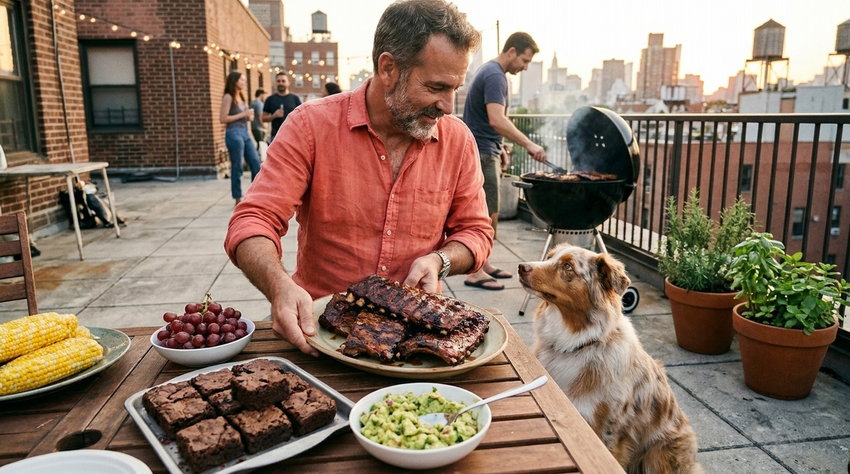
From Christmas Eve to New Year’s Day, most of the foods above are out at once, in every room. Here’s where they tend to turn up, room by room:
- The kitchen counter: rolls rising overnight, cooling cookie trays (chocolate, macadamia nuts, raisins and sometimes xylitol in the sugar-free batch) and the coffee filter in the trash.
- The dining table: stuffing, gravy and casseroles with onion and garlic, ham and turkey bones, and raisin breads like panettone. The FDA warns against high-fat table scraps because of the risk of pancreatitis. Plain, boneless turkey is the better share, and our ham guide explains why ham is a skip.
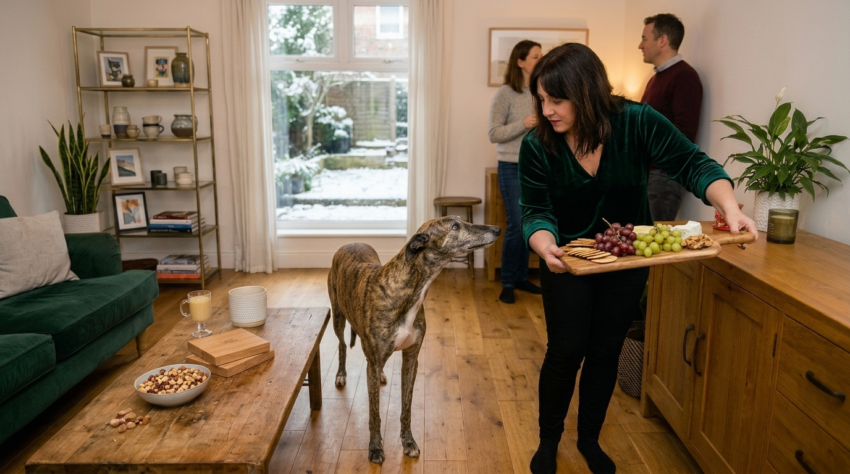
- The coffee table: cheese boards with grapes, nut bowls, fruitcake, rum balls and drinks. Eggnog and mulled drinks bring nutmeg and usually alcohol (more in our cinnamon and nutmeg guide).
- Under the tree and in stockings: wrapped chocolate, candy canes and peppermint bark. Sugar-free candy can contain xylitol, and the bark often has chocolate. See our peppermint guide.
- The front hall: guests’ bags and coats with gum and mints.
- The trash: the turkey carcass, ham bones, foil and string soaked in drippings. Take it outside to a bin with a lid the same night.
- The New Year’s Eve party: guacamole with onion and garlic, salty chips and glasses left at nose height.
Our Christmas safety tips for dogs cover the non-food hazards too, from tinsel to tree water.
What Fruits Can Dogs Not Eat?
Grapes, raisins and currants are the fruits to never share. For most other fruits, the flesh is fine and the problem is the seeds, pits, cores and stems:
- Apples: the flesh is fine, but the ASPCA lists the seeds, stems and leaves as toxic. See can dogs eat apples.
- Peaches, plums, cherries and avocados: the pits are a choking and blockage risk. Share pitted, plain pieces only, and skip avocado altogether when it comes as guacamole.
- Fruit in desserts: pie fillings, fruitcake and candied fruit bring sugar, spices and often raisins along.
For the fruits that are fine to share, see our list of fruits dogs can eat, including blueberries and pomegranates.
What Vegetables Can Dogs Not Eat?
Onions, garlic, chives and leeks are the vegetables to keep away from dogs, in any form. Many other plain, cooked vegetables are fine in small amounts. The bigger worry at the holidays is how vegetables are dressed: butter, salt, cheese sauce and fried onion toppings. Our guide to vegetables dogs can eat has the full list.
Holiday Foods Dogs Can Have
Your dog doesn’t have to sit out the celebrations. The trick is timing: set a few plain pieces aside before anything gets buttered, salted or seasoned.
- Plain turkey breast, boneless and skinless.
- Plain sweet potato and plain pumpkin, not the pie.
- Plain green beans or carrots, before the casserole topping goes on.
- A dog-safe treat of their own, like our New Year’s Eve dog treats (check the peanut butter label for xylitol first).
How much depends on your dog’s size and diet, so ask your vet if you’re unsure, especially for dogs with a sensitive stomach or a medical condition. For the whole spread, dish by dish, see Thanksgiving foods dogs can and can’t eat.
If you do one thing before the holidays, save three numbers in your phone today: your vet, the nearest emergency clinic and one of the poison lines above. It takes two minutes, and it means you won’t be searching for them with a dog who just ate the fudge.
What Can Dogs Not Eat: FAQ
What foods are toxic to dogs?
Chocolate, grapes, raisins, onions, garlic, xylitol, alcohol, caffeine, macadamia nuts and raw yeast dough are the main foods that are toxic to dogs. Cooked bones are dangerous too, because they can splinter.
What fruits can dogs not eat?
Grapes, raisins and currants. For other fruits, skip the seeds, pits, cores and stems, and avoid fruit baked into sugary desserts.
Is it OK if my dog ate a little chocolate?
Call your vet or a poison line now rather than waiting. The risk depends on the type of chocolate and your dog’s size, and baking chocolate is the most dangerous.
Can dogs eat holiday leftovers?
Only plain pieces set aside before cooking, like boneless turkey breast or plain sweet potato. Skip bones, skin, drippings, stuffing, gravy and anything seasoned with onion or garlic.
Which peanut butter has xylitol?
The FDA says some peanut and nut butters contain xylitol. Read the ingredient list on every jar before sharing, and skip any that list xylitol.
What should I do if my dog ate something toxic?
Call your vet, an emergency clinic or a poison line right away, even if your dog seems fine. Don’t make your dog throw up unless they tell you to. Have the label, the amount, the time and your dog’s weight ready.
Keep Reading
Sources
- ASPCA Animal Poison Control: People Foods to Avoid Feeding Your Pets
- ASPCA Animal Poison Control: Toxic and Non-toxic Plants, Apple
- U.S. Food and Drug Administration: Keep Your Dogs and Cats Safe From Holiday Hazards
- U.S. Food and Drug Administration: Paws Off Xylitol; It’s Dangerous for Dogs
- Pet Poison Helpline: Raisins
- Pet Poison Helpline: Bread Dough
This guide is educational and is not a substitute for veterinary advice. If you think your dog ate something harmful, contact your vet or a poison control line right away.