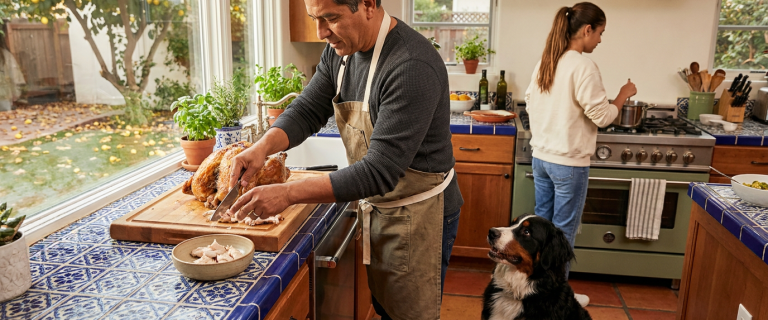
This time of year, pomegranates are everywhere. The seeds get scattered over salads, piled onto cheese boards and dropped into holiday drinks, and a few of those little red jewels always seem to end up on the kitchen floor.
So, can dogs eat pomegranates? Pomegranate isn’t poisonous to dogs, but it isn’t a good treat either. The seeds are tough on a dog’s stomach, and the rind can cause a blockage. A few seeds off the floor is usually nothing to worry about. A whole pomegranate is another story.
Think of it as a few dropped seeds vs. the whole fruit. Below I’ve covered why you’ll see different answers online, the seeds, the rind, the holiday table, what to do if your dog’s mouth (or poop) turns red and why pomegranate shows up in some dog foods.
Quick answer
Pomegranate isn’t poisonous to dogs, but it isn’t a good treat either. The seeds are hard to digest and can upset a dog’s stomach, and the rind (the tough outer skin) can cause a blockage. If your dog snagged a few seeds off the floor, that usually isn’t a problem for a healthy adult dog. Don’t offer it on purpose, and keep whole pomegranates, rinds, juice drinks and holiday cocktails out of reach. If your dog ate a rind, a whole pomegranate or anything chocolate-covered, call your vet.
Already Ate Pomegranate?
A few seeds is a watch-and-see situation for most healthy adult dogs. Call now if any of these happened:
- They ate the rind or a whole pomegranate. The tough skin can cause a blockage.
- They ate a big pile of seeds, or they’re a small dog who ate more than a few.
- The seeds were chocolate-covered, or came out of a cocktail, a cheese board with grapes or a sugar-free syrup.
Then gather three details. They’re the first things a vet or poison line will ask:
- What they ate, such as seeds, rind, juice, a cocktail or chocolate-covered seeds, plus the package if you have it.
- How much, and roughly when.
- Your dog’s weight.
Then call. Don’t wait for symptoms.
Your own vet
Call first if they’re open.
Don’t make your dog throw up unless a vet or poison line tells you to.
Regular vet closed for the holiday? See our best telehealth vets for dogs.
The good news is that most dogs who snag a few seeds are fine, with a mildly upset stomach at worst. Below you’ll find why the advice online is so mixed, what to do about the rind, the holiday-table hazards and a calm answer to “is that blood?”
If your dog got into a whole pomegranate, jump to my dog ate the rind. For the rest of the holiday table, see our guide to Thanksgiving foods dogs can and can’t eat.
Is Pomegranate Poisonous to Dogs?
No, pomegranate isn’t considered poisonous to dogs, but vets still say to skip it. The AKC’s chief veterinary officer explains that pomegranate isn’t toxic, but the seeds can cause stomach trouble and pieces of the rind and stem can cause a blockage, especially in small dogs. PetMD’s vet-reviewed guide goes further and says dogs shouldn’t eat pomegranate at all.
Why You’ll See Different Answers Online
Because there’s very little research on dogs and pomegranate, and “not toxic” often gets turned into “safe.” Here’s what’s behind the confusion:
- The big vet sources say skip it. AKC says to avoid letting your dog snack on it, and PetMD says not to feed it.
- Some sites say “safe in moderation.” That usually means “not toxic,” which isn’t the same as “a good treat.” Even one vet-reviewed page that uses the label notes that research on dogs eating fresh pomegranate is limited.
- The ASPCA’s plant list doesn’t include pomegranate at all. You’ll see sites claim the ASPCA calls it non-toxic, but there’s no entry on its toxic and non-toxic plants list, and the ASPCA notes the list isn’t complete.
- An older version of this page said yes, too. We’ve updated it to match what vets recommend.

Can Dogs Eat Pomegranate Seeds?
It’s best not to share them. The juicy red seeds (called arils) are tough for dogs to digest. AKC’s Dr. Klein notes that the seeds can upset a dog’s stomach, and because they don’t break down easily, a lot of them can cause a blockage.
A few seeds that hit the floor are a very different thing from a bowlful. Most healthy adult dogs who snag a few are fine. If your dog ate a lot, is a small dog or starts vomiting, has diarrhea or stops eating, call your vet.
Can Dogs Have Dried Pomegranate Seeds?
Skip them. Dried seeds are harder and more concentrated, and many are sweetened. They’re even tougher on a dog’s stomach than fresh ones.
My Dog Ate the Rind or a Whole Pomegranate. What Now?
Call your vet. The rind and the stem don’t break down, and pieces can get stuck in a dog’s stomach or intestines. This is the part of the pomegranate to worry about most, and it’s exactly what ends up on the floor when a whole fruit rolls off the counter.
Vomiting is the most common sign that something is stuck, according to the AKC. Call right away if you notice any of these:
- Vomiting, especially more than once
- Not wanting to eat
- Drooling more than usual
- A sore or bloated belly
- Straining to poop with little or nothing coming out
- Seeming tired or just not themselves
Don’t make your dog throw up unless a vet tells you to. If your dog is choking right now, the AKC has step-by-step instructions for the dog Heimlich maneuver.
When you’re cutting a pomegranate, put the rind straight into a bin with a lid. A pile of rinds in an open compost bucket is a classic holiday raid.
Pomegranates on the Holiday Table
In December, what’s sitting next to the pomegranate is often the bigger risk. Here’s the holiday table, item by item:
The ASPCA warns that alcohol can cause vomiting, diarrhea, poor coordination and worse in pets, and that xylitol can cause low blood sugar and liver damage. Grapes and raisins on a cheese board are a call-your-vet food too. Our guide to what nuts dogs can eat covers the rest of the board, and our Christmas safety tips cover the season.
My Dog’s Mouth (or Poop) Is Red. Is That Blood?
It might just be pomegranate juice. Pomegranate stains everything it touches, from muzzles and paws to carpets and the couch. Red foods can tint a dog’s poop, too. PetMD notes that colored foods like beets or red-dyed treats can make stool look like it has blood in it.

Here’s how to tell the difference:
- Probably food: the red wipes off fur easily, your dog is acting normal and their poop is otherwise normal.
- Call your vet: you see clots, red with mucus, diarrhea, straining, vomiting or a dog who’s tired or off their food.
- Not sure? Call anyway, and tell them your dog ate pomegranate. A photo helps.
Our guide to what your dog’s poop is telling you covers the other colors.
Is Pomegranate Good for Dogs? (Why Is It in My Dog’s Food?)
Pomegranate is full of antioxidants, but dogs don’t need it from the fruit bowl. PetMD points out that dogs eating a complete and balanced dog food already get the nutrients they need.
So why does pomegranate show up in some dog foods, like Farmina N&D’s Chicken & Pomegranate line? Because a formulated food is a different thing from fresh fruit. The pomegranate is measured, cooked into a complete recipe and comes without the rind or a bowlful of seeds. The early research AKC mentions looked at pomegranate extract in dogs, not the fruit itself.
If you’re thinking about a pomegranate supplement, ask your vet first, and skip human supplements, which can contain xylitol. Dogs on a prescription diet shouldn’t get anything outside it.
Can Dogs Have Pomegranate Juice?
Skip it. Pomegranate juice has a lot of sugar and none of the fiber, and some bottles are sweetened or blended with other juices, including grape. Check any “light” or “no sugar added” versions for xylitol, and read the label on blends. Water is the better choice. Our guide to the effects of sugar in dogs explains why the sugar matters.
If your dog lapped up a little spilled pure pomegranate juice, the most likely result is a sticky red face. Watch for an upset stomach, and call your vet if the juice was a blend with grape or a sugar-free version.
Can Puppies or Dogs with Health Issues Eat Pomegranate?
No, skip it entirely. Puppies and dogs with a sensitive stomach are more likely to get an upset tummy from the seeds. For diabetic dogs, dogs who need to lose weight and dogs on a prescription diet, ask your vet about treats that fit their plan.

What to Give Instead
If your dog loves a juicy red fruit, there are much better options to share:
- Strawberries: red, sweet and soft. See can dogs eat strawberries? and try these frozen strawberry and blueberry dog treats.
- Blueberries: small and easy to share. See can dogs eat blueberries?
- Plain cranberries: a few fresh or plain cooked berries, not the sauce. See can dogs eat cranberries?
- Plain pumpkin: a small spoonful of 100% canned pumpkin. See can dogs eat pumpkin?
- Plain sweet potato: cooked and peeled. See can dogs eat sweet potatoes?
For the full list, see safe fruits dogs can eat.
Before You Set Out the Pomegranates
Keep the seeds on the counter, the rinds in a bin with a lid and the cheese board, cocktails and chocolate-covered seeds well out of reach. If a few seeds hit the floor, don’t panic. If a whole pomegranate goes missing, call your vet.
Save both poison line numbers in your phone before the holiday: ASPCA Animal Poison Control at (888) 426-4435 and Pet Poison Helpline at (855) 764-7661.
Pomegranates for Dogs: FAQ
Are pomegranates toxic to dogs?
Pomegranate isn’t considered toxic to dogs, but vets say to skip it. The seeds can upset a dog’s stomach, and the rind and stem can cause a blockage.
Can dogs eat pomegranate seeds?
It’s best not to share them. The seeds are hard for dogs to digest and can cause vomiting or diarrhea. A few seeds off the floor usually isn’t a problem for a healthy adult dog.
How much pomegranate can I give my dog?
It’s best not to offer it at all. If your dog snags a few seeds, keep an eye on them and call your vet if they vomit, stop eating or seem uncomfortable.
What should I do if my dog ate a pomegranate rind?
Call your vet. The rind can cause a blockage in the stomach or intestines. Watch for vomiting, not eating, a sore belly or straining to poop, and don’t make your dog throw up unless a vet tells you to.
Are pomegranates good for dogs?
Pomegranate has antioxidants, but dogs on a complete and balanced food don’t need it. Pomegranate in a formulated dog food is a different thing from fresh fruit.
Can dogs have pomegranate juice?
It’s best to skip it. Pomegranate juice is high in sugar, and some blends contain grape juice or sweeteners like xylitol.
Can puppies eat pomegranate?
No. Puppies have sensitive stomachs, so skip pomegranate entirely and call your vet if your puppy got into a rind.
Keep Reading
Sources
- American Kennel Club: Can Dogs Eat Pomegranates?
- PetMD: Can Dogs Eat Pomegranate? (reviewed by Sandra C. Mitchell, DVM)
- WebVet: Can Dogs Eat Pomegranate? (reviewed by Athena Gaffud, DVM)
- ASPCA Animal Poison Control: Toxic and Non-Toxic Plants List
- American Kennel Club: Intestinal Blockage in Dogs
- American Kennel Club: Dog Choking and the Heimlich Maneuver
- ASPCA Animal Poison Control: People Foods to Avoid Feeding Your Pets
- PetMD: Dog Pooping Blood, Common Causes and What to Do
This guide is educational and is not a substitute for veterinary advice. If you think your dog ate something harmful, contact your vet or a poison control line right away.