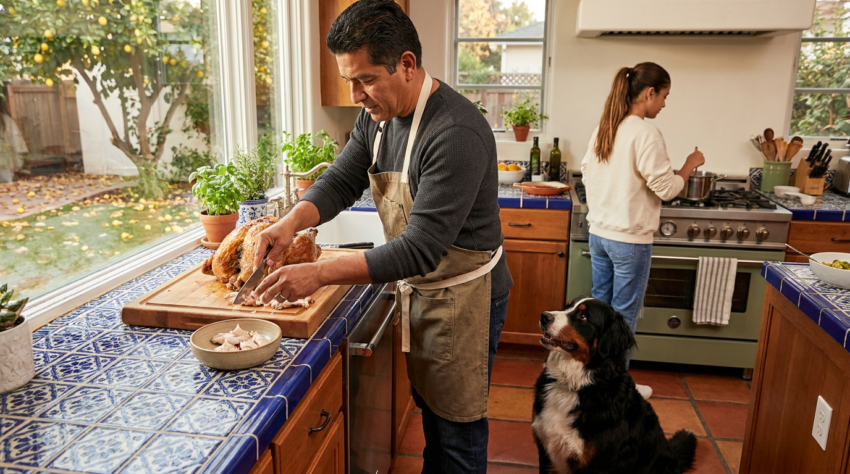
The turkey’s resting on the counter, someone’s sharpening the carving knife, and your dog has quietly taken up a post right where the scraps tend to fall. They know. They always know.
So, can dogs eat turkey? Yes, plain turkey is fine for most dogs. Boneless, skinless, fully cooked turkey with no seasoning makes a great treat, and turkey is a common ingredient in dog food. Holiday turkey is a different story, with skin, butter, rubs, brine and bones.
Think of it as plain turkey vs. holiday turkey. Below I’ve covered every form of turkey at a glance, why the skin is a skip even when it’s unseasoned, ground turkey for everyday cooking, deli turkey and turkey bacon, raw turkey and how to share the bird safely.
Quick answer
Yes, plain turkey is fine for most dogs. Boneless, skinless, fully cooked turkey with no seasoning makes a good treat, and it’s a common ingredient in dog food. Skip the fatty skin and drippings, anything seasoned with onion or garlic, raw or undercooked turkey and every single bone. If your dog ate a turkey bone or a lot of skin and fat, call your vet.
Already Ate Turkey?
Plain turkey meat is usually fine. Check these first, and call now if any of them happened:
- Did they eat a bone or get into the carcass? Cooked poultry bones can splinter. Our turkey bones guide covers what to do next.
- Did they eat a lot of skin, fat or drippings? Rich, fatty food is linked to pancreatitis.
- Was it stuffed or seasoned with onion or garlic?
Then gather three details. They’re the first things a vet or poison line will ask:
- What they ate, such as meat, skin, a bone or stuffing, plus the recipe if you have it.
- How much, and roughly when.
- Your dog’s weight.
Then call. Don’t wait for symptoms.
Your own vet
Call first if they’re open.
Don’t make your dog throw up unless a vet or poison line tells you to.
Regular vet closed for the holiday? See our best telehealth vets for dogs.
The good news is that a few pieces of plain turkey meat are one of the safest things your dog can get from the holiday table. Below you’ll find every form of turkey at a glance, the skin question, ground turkey for everyday meals and a no-numbers answer to “how much turkey can I give my dog?”
If your dog already got into the turkey, jump to my dog ate turkey. For everything else on the table, see our guide to Thanksgiving foods dogs can and can’t eat.
DogVills is reader-supported. If you buy through links on this page, we may earn a commission at no extra cost to you.
Turkey for Dogs: Which Kinds Are Safe?
Green means fine in small, plain amounts for most healthy dogs. Amber means skip it. Red means no.
Every green row is turkey meat with nothing added and nothing left on. Skin, seasoning, salt, smoke, oil and bones are what move a row down, and they’re what make holiday turkey so different from the plain turkey in a bag of dog food.
Is Turkey Good for Dogs?
Plain turkey is a lean, tasty protein, and most dogs think it’s one of the best things that ever happened to them. It’s also a common ingredient in dog food and treats, which is exactly why the holiday warnings confuse so many people.
The turkey in dog food is plain, cooked and boneless. The turkey on your table usually comes with butter, crispy skin, a seasoning rub, maybe a salty brine and a whole lot of bones. If you’ve ever wondered what “turkey meal” on a dog food label means, our guide to what chicken meal really means explains how those ingredients work.
Who should check first: dogs on a prescription diet, dogs with food allergies and dogs who’ve had pancreatitis. Ask your vet before sharing people food.

Why Is Holiday Turkey Different?
Holiday turkey comes with extras that plain turkey doesn’t. Here’s what to watch for:
- Skin and drippings. They’re mostly fat. The FDA specifically warns against giving pets skin from a roasted turkey or chicken, because fatty scraps can lead to pancreatitis.
- Butter and oil. More fat, rubbed under the skin and basted over the top.
- Onion and garlic. They show up in rubs, stuffing and gravy, and the ASPCA notes they can damage red blood cells.
- Brine and salt. Brined turkey can be very salty, and so can smoked turkey.
- Stuffing. Anything cooked inside the bird soaks up those juices, and stuffing usually has onion, garlic and sometimes raisins.
- Bones. Cooked bones splinter. That one gets its own guide: can dogs eat turkey bones?
Can Dogs Eat Turkey Skin?
Skip it, even if it’s unseasoned. Most people asking about turkey skin are hoping to find a safe version: unseasoned, smoked or just the skin from the leg. The trouble is the fat, not only the seasoning. Turkey skin is mostly fat whether or not anything was rubbed on it, and fatty scraps are what put dogs at risk of an upset stomach or pancreatitis.
Smoked skin adds salt, and fried skin adds oil. Peel the skin off before you share, and give your dog the plain meat underneath.
Can Dogs Eat Ground Turkey?
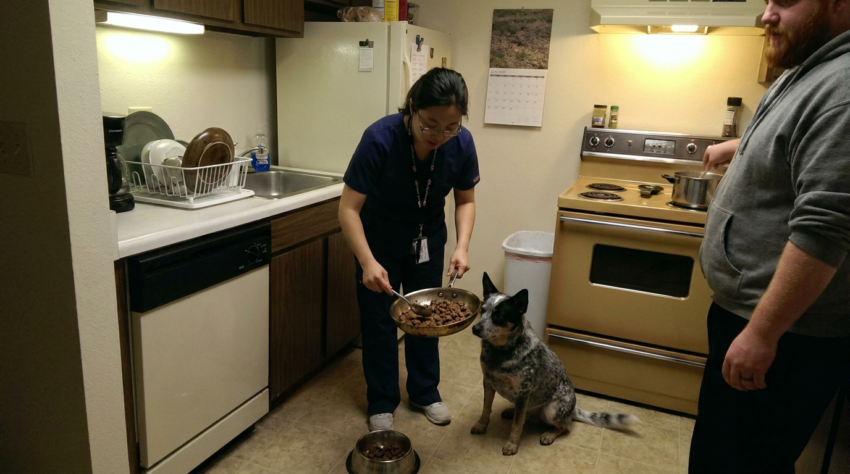
Yes, plain ground turkey is a great option for most dogs. Cook it all the way through, drain off the fat and leave out the seasoning. A small spoonful mixed into your dog’s regular food makes an easy topper.
Ground turkey is the turkey most of us cook all year, so it’s worth getting right:
- Cook it fully. No pink. Raw or undercooked turkey can carry salmonella.
- Drain it. Pour off the fat before you share.
- Pull your dog’s portion before seasoning. Taco seasoning, onion powder and garlic powder are all a no.
- Keep it a treat or a topper. Plain turkey by itself isn’t a complete diet for a dog.
If your vet has your dog on a bland diet, follow the recipe they gave you.
Can Dogs Eat Deli Turkey or Turkey Bacon?
Skip them, or keep it to a rare tiny bite. Deli turkey, turkey bacon and turkey hot dogs are processed and salty. They’re easy to share because they’re always in the fridge, which is exactly how they turn into a habit.
A slice of deli turkey that falls off a sandwich isn’t an emergency for most healthy dogs. Just don’t make it a regular treat. Our guide to bacon for dogs covers the same salt-and-fat problem in the original version.
Can Dogs Eat Raw Turkey?
Don’t share raw turkey from the kitchen. The ASPCA warns that raw or undercooked turkey may carry salmonella, and that’s a risk for the people in your house too.
That goes for the raw bird sitting on the counter waiting for the oven, too. Push it well back, because counter-surfing dogs don’t wait for things to be cooked. If you feed a raw diet on purpose, that’s a conversation to have with your vet, and it’s a different thing from sharing raw turkey scraps.
Can Dogs Eat Turkey Necks?
Never a cooked turkey neck. It’s a bone, and cooked bones can splinter. Raw necks are sometimes fed as chews by people who feed raw, but that’s a decision to make with your vet, not a scrap from the roasting pan.
Can Dogs Eat Smoked or Deep-Fried Turkey?
Skip both. Smoked turkey is usually brined or rubbed first, so it’s salty and seasoned all the way through. Deep-fried turkey has an oily, crispy skin that’s even fattier than roasted.
If you really want to share, the only maybe is a small piece of plain inner meat with no skin, and only if no onion or garlic went into the rub or marinade. When in doubt, give your dog a bite of something plain instead.
My Dog Ate Turkey. What Should I Do?
If it was a few pieces of plain turkey meat, your dog will most likely be fine. Things change if anything else came with it.
Call your vet or a pet poison line if your dog:
- Ate a bone or got into the carcass
- Ate a lot of skin, fat, drippings or gravy
- Ate stuffing, gravy or turkey seasoned with onion or garlic
- Ate raw or undercooked turkey
- Is small, has had pancreatitis or seems unwell
Don’t make your dog throw up unless a vet tells you to. Then keep an eye on them for vomiting, diarrhea, a sore belly or a dog who suddenly isn’t interested in food.
How Do I Share Turkey with My Dog Safely?
Pull a few plain pieces before anything else happens to the bird, and keep it to a few small bites. Here’s the routine that works:
The one-feeder rule sounds fussy, but with a full table of guests it’s the easiest way to keep those bites small.
Turkey Recipes for Dogs
Want to make your dog something special? These DogVills recipes are built around turkey:
- Homemade turkey treat for dogs
- Turkey feast homemade dog treats
- Turkey-shaped hypoallergenic dog treats
- Homemade dog gravy to pour over their plate
And if your dog would happily eat turkey every night of the year, that’s usually the point where people start looking at fresh food.
Want Real Meat in the Bowl Every Day?
A complete fresh dog food gives your dog real meat and vegetables, balanced for dogs, without the skin, butter or bones.
Our pick for the holiday
Freshpet
Refrigerated fresh recipes with real meat and vegetables, sold in grocery store fridges and also available for delivery.
DogVills is reader-supported. If you buy through links on this page, we may earn a commission at no extra cost to you.
Before You Carve the Turkey
Share the plain version: a few pieces of boneless, skinless turkey with nothing on it, mixed into your dog’s regular food. Keep the skin, the drippings, the stuffing and every bone away from the dog bowl, and pick one person to be in charge of the dog’s share.
Save both poison line numbers in your phone before the holiday: ASPCA Animal Poison Control at (888) 426-4435 and Pet Poison Helpline at (855) 764-7661.
Turkey for Dogs: FAQ
Is cooked turkey OK for dogs?
Yes, plain cooked turkey is fine for most dogs. Make it boneless, skinless and unseasoned, and share a few small bites as a treat.
Can dogs eat turkey skin?
It’s best to skip it, even unseasoned. Turkey skin is mostly fat, and fatty scraps can cause an upset stomach or pancreatitis.
Can dogs eat ground turkey?
Yes, if it’s plain, fully cooked and drained, with no seasoning. It works well as a treat or a topper on your dog’s regular food.
Can dogs eat deli turkey?
It’s best to skip it. Deli turkey is salty and processed. A slice that falls off a sandwich isn’t an emergency for most healthy dogs, but it shouldn’t be a regular treat.
How much turkey can I give my dog?
A few small bites of plain turkey as a treat, not a meal. If you’d like to add turkey to your dog’s food regularly, ask your vet what’s right for your dog.
Can dogs eat turkey necks?
Never a cooked turkey neck, because cooked bones can splinter. Raw necks are a conversation to have with your vet, not a scrap to share from the kitchen.
Is turkey bad for dogs with pancreatitis?
If your dog has had pancreatitis, ask your vet before sharing any people food, including turkey.
Keep Reading
Sources
- ASPCA: Thanksgiving Safety Tips
- ASPCA Animal Poison Control: People Foods to Avoid Feeding Your Pets
- U.S. FDA: Keep Your Dogs and Cats Safe From Holiday Hazards
This guide is educational and is not a substitute for veterinary advice. If you think your dog ate something harmful, contact your vet or a poison control line right away.