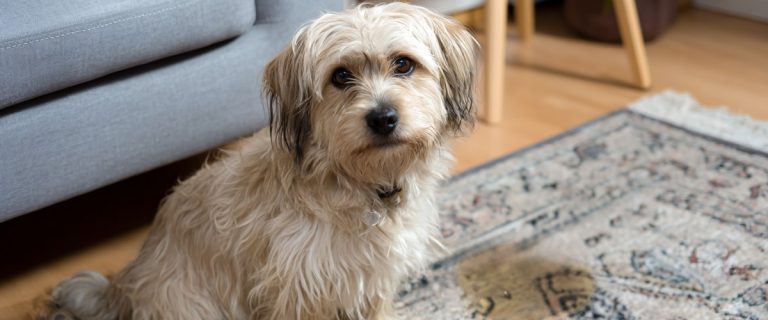
Why Is My Dog Peeing Indoors? And How to Stop It for Good

# DOGVILLS

By:

Nicole
Picture of Nicole

Nicole

Writer

Hi there! I’m Nicole, the editor-in-chief and one of the writers here at DogVills. I’ve been a dog owner for most of my adult life and a dog lover for much longer than that. I grew up with a wonderful German Shepherd named Jake, who I loved SO much that I named my son after him. When I’m not writing for DogVills or my own site, Pretty Opinionated, I love spending time with my teenager (when he actually lets me) and my Pharaoh Hound, Freya. I’m also an avid reader AND a total TV fanatic.

Fact checked by: Nicole Etolen

Updated On:

Why Is My Dog Peeing Indoors? And How to Stop It for Good

DogVills is your trusted resource for all things related to responsible dog ownership. With a clear mission to enrich the lives of both dogs and their owners, we combine passion and expertise to provide valuable insights, tips, and advice for a happier, healthier bond with your furry friend.

Table of Contents

Few things are more frustrating than finding yet another puddle inside the house. Whether it’s your puppy, a newly adopted rescue, or even a senior dog who’s suddenly having accidents, you’re probably wondering how to stop a dog from peeing in the house once and for all.

Here’s the good news: you’re not alone, and this problem is usually fixable. Sometimes it’s a health issue, other times it’s behavioral—but in both cases, there are clear steps you can take to get things back under control. 

🐶 TL;DR — How to Stop Indoor Peeing Fast

  • ✔️ First, rule out medical issues like UTIs or kidney problems with a vet visit.
  • ✔️ Use an enzyme cleaner—regular cleaners won’t fully remove the scent markers that tell your dog “pee here again.”
  • ✔️ Stick to a consistent potty routine (after meals, after play, before bed).
  • ✔️ Reinforce good behavior with treats and praise instead of punishment.
  • ✔️ Try simple home remedies: vinegar spray to neutralize odors, citrus scents to deter marking, and bell training for communication.

Scroll on for health vs. behavioral causes—and the step-by-step fixes that actually work.

🩺 Health Causes
UTIs, diabetes, kidney disease, or meds.
🐕 Behavior Causes
Anxiety, marking, or inconsistent training.
🏡 Home Remedies
Vinegar spray, baking soda, citrus deterrents.

Behavioral Reasons Dogs Pee Indoors

If your vet rules out health issues, the next step is looking at behavior. Dogs may pee inside for several reasons—and while frustrating, these are usually fixable with consistency and the right tools.

Lack of House Training

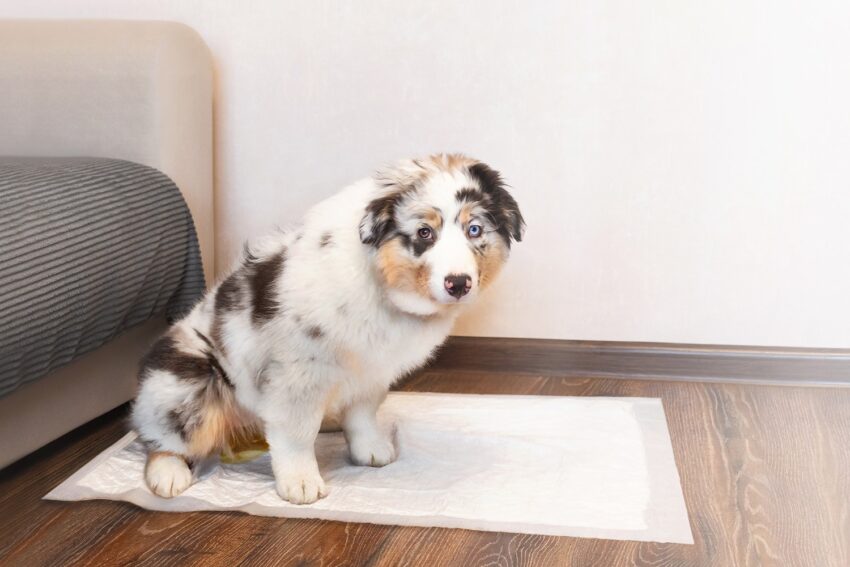
Puppies or newly adopted rescues may not fully understand where they’re supposed to go yet. In these cases, structure and patience are key. Products like Fresh Patch (real grass pads) or Porch Potty (a built-in outdoor potty system) can bridge the gap by giving your dog a clear spot to go when you can’t get them outside in time.

Stress or Anxiety

Changes in routine, moving to a new home, or being left alone can all trigger indoor accidents. Some dogs urinate as a coping mechanism when they feel anxious.

Marking Territory

Both male and female dogs may mark indoors, especially if another animal is in the house. Neutering often helps reduce marking, but training and odor removal are crucial too.

Submissive Urination

Some dogs pee when they’re excited or nervous—like greeting visitors or when scolded. This isn’t defiance, it’s communication, and requires gentle training to overcome.

Inconsistent Routines

If potty breaks aren’t on a reliable schedule, accidents are bound to happen. Consistency is everything when teaching bladder control.

Hot Tip:

For apartment living or bad-weather days, a subscription service like Doggie Lawn (real grass patches delivered to your door) makes training easier and keeps dogs on track between outdoor walks.

How to Stop a Dog from Peeing in the House (Step-by-Step)

Why Is My Dog Peeing Indoors? And How to Stop It for Good

Once you’ve ruled out health problems, it’s time to put a plan in place. Here’s how to stop a dog from peeing in the house and get them back on track:

1. Start with a Vet Check
Even if you suspect behavior, a quick exam ensures you’re not missing an underlying medical issue like a UTI or diabetes.

2. Deep Clean Problem Spots
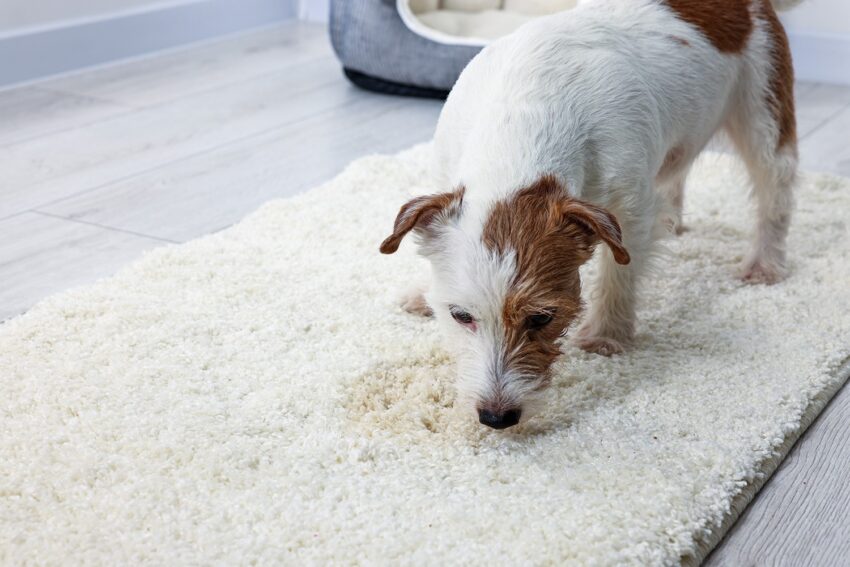
Use an enzyme cleaner designed for pet urine – we love KinderBean Dog Urine Eliminator. Regular cleaners (even vinegar alone) don’t fully break down the scent markers that tell your dog, “This is a bathroom spot.”

3. Lock in a Potty Routine
Take your dog out at the same times every day—after meals, after play, before bed. Consistency builds habit.

4. Reward the Right Behavior
Every time your dog goes outside, celebrate! Treats, praise, or play help them connect outdoors with positive rewards.

5. Use Potty Aids if Needed
If outdoor trips aren’t always possible, products like Fresh Patch, Porch Potty, or Doggie Lawn give dogs a clear “yes, here” option. They’re especially helpful for apartment dwellers or during extreme weather.

6. Try Crate or Safe-Space Training
Dogs are less likely to soil where they sleep. A crate or pen (used positively, never as punishment) helps set boundaries while reinforcing routine.

7. Manage Water Before Bed
Don’t restrict water entirely, but removing access an hour or two before bedtime can prevent overnight accidents.

⚠ Heads-up: Punishment doesn’t work and often makes the problem worse. Focus on redirection and rewards instead.

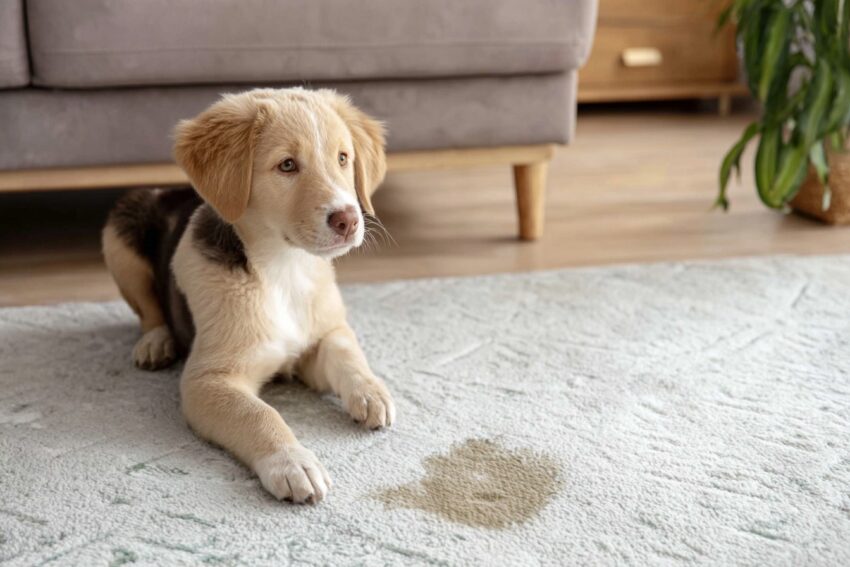
🐾

Need indoor potty solutions?

Apartment living or bad weather making outdoor trips tough? Check out our guide to the top picks for hassle-free indoor potty options: Best Indoor Dog Potty Systems

Home Remedies That Can Help

While training and consistency are key, a few simple home remedies can make a big difference in stopping repeat accidents and keeping your house fresh:

  • Vinegar + Water Spray. Mix equal parts vinegar and water in a spray bottle. Use it on cleaned spots to neutralize odor and discourage your dog from peeing there again.
  • Citrus Deterrent. Dogs often dislike citrus scents. A homemade spray with lemon or orange peels steeped in water can help deter marking in problem areas.
  • Baking Soda for Carpets. Sprinkle baking soda on dried spots, let sit overnight, then vacuum. It helps absorb lingering odors that even cleaners may miss.
  • Bell Training at the Door. Hang a small bell on your door and teach your dog to nudge it when they need to go out. It’s a simple communication tool that prevents “silent accidents.”
  • Extra Outdoor Time. Sometimes the best home remedy is just increasing potty breaks—especially for puppies or small breeds with tiny bladders.

Pro Tip: Always test sprays (vinegar, citrus) on a small patch of fabric or flooring first to make sure they don’t stain.

FAQ: Stopping Indoor Peeing

Why Is My Dog Peeing Indoors? And How to Stop It for Good

Is my dog peeing in the house out of spite?
No. Dogs don’t pee out of revenge. Accidents are almost always linked to health, stress, or training—not spite.

Will neutering help my dog stop marking indoors?
Often, yes. Neutering reduces hormone-driven marking in many dogs, though some training is still needed.

How long does it take to stop indoor accidents?
It depends. Puppies may take weeks to fully learn, while rescues or anxious dogs might need a few months of consistent routine. Stick with it—progress is usually steady with consistency.

Can I use pee pads instead of outdoor training?
Pee pads can be useful short-term, especially for puppies or apartment living. But if your long-term goal is outdoor pottying, switch gradually to avoid confusion.

Final Thoughts: You Can Stop Indoor Peeing for Good

Finding puddles in the house is stressful, but it doesn’t mean you’re doomed to a lifetime of accidents. The key is figuring out why your dog is peeing indoors—whether it’s a health issue that needs a vet’s attention or a behavioral hiccup that training can fix.

With the right mix of vet care, consistent routines, deep cleaning, and smart aids like Fresh Patch, Porch Potty, or Doggie Lawn, most dogs make steady progress. Add in patience, positive reinforcement, and a few home remedies, and you’ll start seeing fewer accidents and more outdoor success.

Author

  • Hi there! I'm Nicole, the editor-in-chief and one of the writers here at DogVills. I've been a dog owner for most of my adult life and a dog lover for much longer than that. I grew up with a wonderful German Shepherd named Jake, who I loved SO much that I named my son after him. When I'm not writing for DogVills or my own site, Pretty Opinionated, I love spending time with my teenager (when he actually lets me) and my Pharaoh Hound, Freya. I'm also an avid reader AND a total TV fanatic.

    View all posts

Author

Picture of Nicole

Nicole

Writer

Hi there! I’m Nicole, the editor-in-chief and one of the writers here at DogVills. I’ve been a dog owner for most of my adult life and a dog lover for much longer than that. I grew up with a wonderful German Shepherd named Jake, who I loved SO much that I named my son after him. When I’m not writing for DogVills or my own site, Pretty Opinionated, I love spending time with my teenager (when he actually lets me) and my Pharaoh Hound, Freya. I’m also an avid reader AND a total TV fanatic.
Spread the love

You may also like.