Halloween is a strange holiday when you think about it from a dog’s perspective. Perfectly normal humans suddenly start wearing masks, the doorbell rings every five minutes and there are bowls of delicious-smelling treats everywhere that they’re apparently not allowed to touch.
And that’s before someone puts a hot dog costume on them.
While Halloween is a lot of fun for us, it can be confusing, stressful and even dangerous for dogs. Between potentially toxic candy, unfamiliar visitors and decorations that look suspiciously like chew toys, there are plenty of opportunities for things to go wrong.
Fortunately, keeping your dog safe on Halloween doesn’t mean skipping the festivities altogether. A little planning goes a long way, whether you’re taking your pup trick-or-treating, hosting a party or just handing out candy at home.
Here are 12 practical Halloween safety tips for dogs to help everyone enjoy the holiday without an unexpected trip to the emergency vet.
1. Keep Halloween Candy Well Out of Reach
Let’s start with the biggest Halloween hazard for dogs: candy.
Most dogs aren’t particularly concerned about whether something is safe to eat. If it smells interesting and happens to be within reach, that’s usually enough reason to investigate. Unfortunately, several popular Halloween treats contain ingredients that can make dogs seriously ill.
The biggest concerns include:
- Chocolate: Contains theobromine and caffeine, both of which are toxic to dogs. Dark chocolate and baking chocolate are particularly dangerous because they contain higher concentrations.
- Xylitol: This sugar substitute (also called birch sugar) is extremely toxic to dogs and can cause a rapid drop in blood sugar and potentially liver failure. It’s sometimes found in sugar-free candy and gum.
- Raisins: Even small amounts can cause acute kidney injury in some dogs. Chocolate-covered raisins are especially problematic.
- Candy wrappers: Foil, plastic and cellophane wrappers can cause choking or intestinal blockages if swallowed.
- Large amounts of sugary or fatty treats: Even candy without toxic ingredients can cause vomiting, diarrhea or pancreatitis.
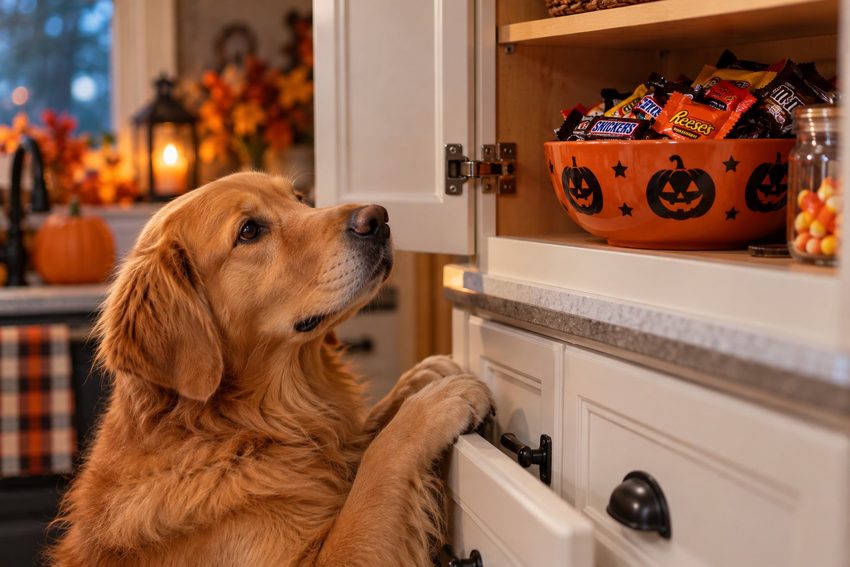
And don’t assume that putting the candy bowl on a table is enough. Some dogs are remarkably resourceful when food is involved.
My advice: Keep Halloween candy in a closed cabinet or other genuinely dog-proof location. Remind kids to put their candy away after sorting through it, too. A bedroom floor covered in Halloween loot is basically an invitation for a curious dog.
If your dog does get into candy, contact your veterinarian or a pet poison control service immediately. Don’t wait for symptoms to appear, especially if chocolate, xylitol or raisins are involved.
2. Have a Plan in Case Your Dog Eats Something Toxic
Even with the best precautions, accidents happen. Dogs are fast, candy gets dropped and sometimes you don’t realize something is missing until you find an empty wrapper.
That’s why I think every dog owner should have a basic poisoning emergency plan in place before Halloween.
Start by saving the phone numbers for your regular veterinarian, the nearest 24-hour emergency animal hospital and the ASPCA Animal Poison Control Center (888-426-4435). Keep your dog’s current weight handy, too, since it can help determine how dangerous a particular exposure might be.
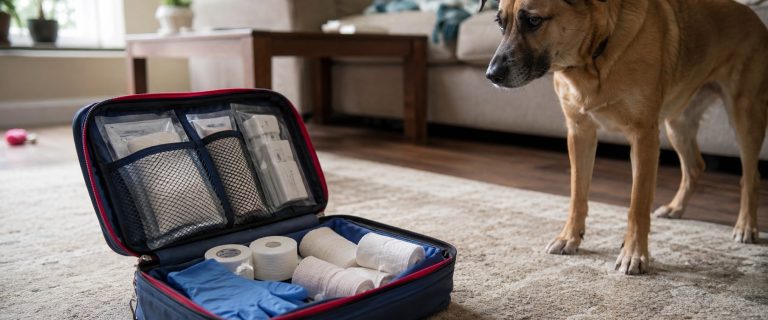
It’s also worth looking into products designed specifically for pet poisoning emergencies.
One option is Dr. Cuddles ReadyRESCUE, a veterinary-formulated activated carbon product designed to bind certain toxins in the digestive tract before they’re absorbed into the bloodstream. It’s intended as an early intervention tool for accidental ingestion of substances such as chocolate and certain medications.
Unlike trying to improvise with household remedies, ReadyRESCUE comes with weight-based dosing instructions specifically for pets.
However, there’s an important distinction here: ReadyRESCUE isn’t an antidote, doesn’t work against every poison and doesn’t replace emergency veterinary care. Activated charcoal isn’t appropriate for every poisoning situation, either. Ask your veterinarian about keeping it in your pet first aid kit and contact a veterinary professional or poison control before administering it during an emergency.
And please don’t try to make your dog vomit unless a veterinarian specifically tells you to. Depending on what your dog swallowed, inducing vomiting can actually make the situation worse.
The goal is to have a plan ready so you’re not frantically searching for answers while your dog is busy looking for a second helping of whatever got them into trouble in the first place.
When your pet swallows something dangerous, ReadyRESCUE gives you the power to act immediately at home. This veterinary-grade activated charcoal microspheres binds poisons in the digestive tract before they reach the bloodstream, helping protect your dog or cat from chocolate, various medications, household chemicals, toxic plants, grapes and more hazards

3. Create a Quiet Space Away From Trick-or-Treaters
Imagine someone ringing your doorbell every few minutes while a parade of strangers in increasingly bizarre outfits appears outside.
Now imagine you have no idea what Halloween is. That’s essentially what some dogs experience on October 31.
Even dogs that normally enjoy visitors can become overwhelmed by the constant activity. And dogs that are already nervous around strangers may find the whole experience downright terrifying.
If you’re expecting trick-or-treaters, consider setting up a comfortable space away from the front door.
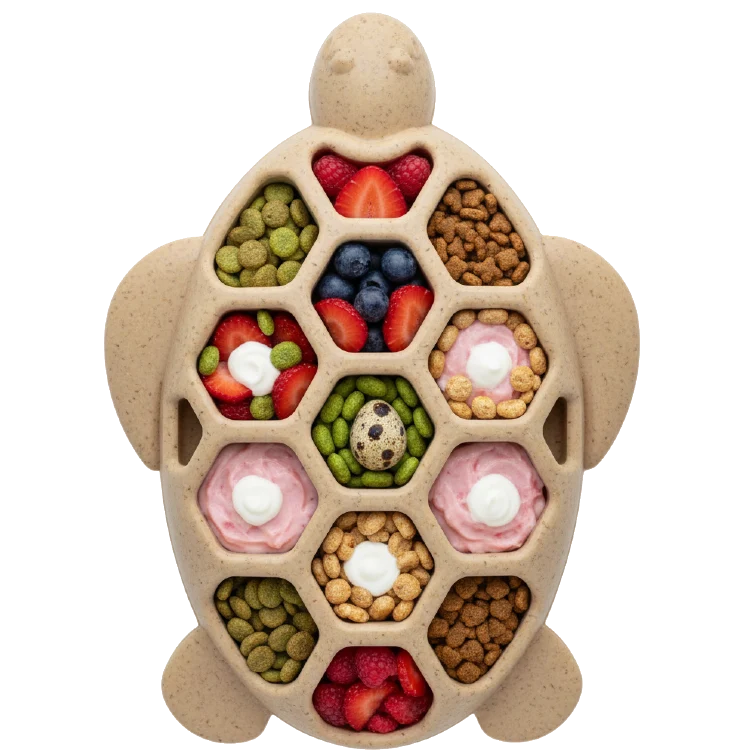
Include their favorite bed, some familiar toys, fresh water and maybe a fun food puzzle or slow-feeder filled with dog-safe treats.
You can also turn on a television, fan or white noise machine to help muffle the doorbell and outside activity.
Most importantly, don’t force your dog to participate. If they’d rather spend Halloween sleeping in your bedroom, that’s perfectly fine. In fact, they might have the right idea.
The SodaPup Turtle eChew is a dual-purpose chew toy and treat dispenser for power chewers — made in the USA from an FDA-compliant nylon material that creates a uniquely tough, long-lasting chew surface. The turtle shell design features grooves and ridges that hold peanut butter, yogurt, or soft treats for extended enrichment sessions.
4. Be Extra Careful About Open Doors
Halloween is one of those occasions when the front door seems to spend more time open than closed.
Between handing out candy, greeting visitors and keeping track of excited kids, it’s surprisingly easy for a dog to slip outside unnoticed.
Even a normally reliable dog might bolt if they’re frightened by a costume, loud noise or unfamiliar person.
To reduce the risk:
- Use a baby gate or exercise pen to create a barrier between your dog and the front door.
- Keep nervous or excitable dogs in a separate room during trick-or-treating hours.
- Make sure everyone in the household knows not to let the dog outside unattended.
- Check that your dog’s collar and identification tags are secure.
If your dog is particularly talented at escaping, consider keeping them completely away from the entryway until trick-or-treating is over.
A little inconvenience is much better than spending Halloween searching the neighborhood with a flashlight.
Bonus Tip: Consider a GPS Dog Tracker
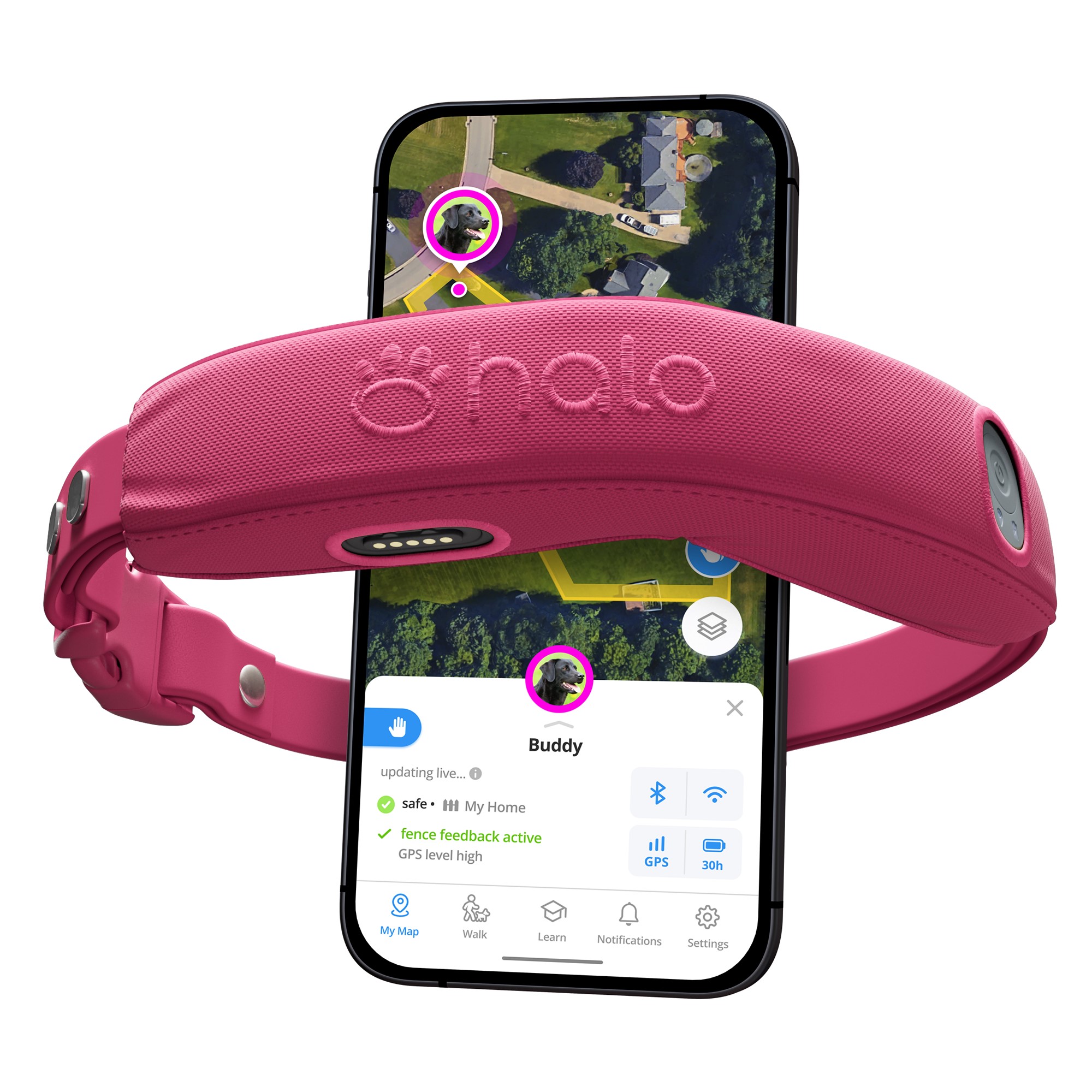
If your dog is an escape artist (or just particularly curious about what’s happening outside), a GPS dog tracker is worth considering. Unlike a microchip, which only helps identify your dog after someone finds them, a GPS tracker lets you monitor their location and can help you find them faster if they slip out the door.
Marketed as the most accurate GPS dog fence available, the Halo Collar 5 lets you create, edit, and store unlimited fences (starting at 30 x 30 feet). It fits dogs with neck sizes from 8–30.5 inches. Beyond containment, it offers near pin-point GPS tracking to help locate lost dogs quickly, along with built-in training tools and activity monitoring—all in one collar.
Top Features:
- 48-hour battery life
- AlwaysOn™ GPS
- Real-time tracking
- All-carrier cellular coverage worldwide.
BEST PRICE GUARANTEED
Save $125 on Halo Collar 5
*Based on new low price + our $50 exclusive discount. Extra discount applied at checkout.
5. Make Sure Your Dog’s Identification Is Up to Date
Even if you don’t plan to take your dog anywhere on Halloween, double-check their identification before the holiday.
Their collar should have an ID tag with your current phone number, and their microchip registration should contain accurate contact information.
If your dog isn’t microchipped, it’s worth discussing with your veterinarian.
A microchip won’t track your dog’s location, but it can help reunite you if someone finds them and takes them to a shelter or veterinary clinic.
For dogs that are especially prone to wandering or escaping, a GPS tracker can provide another layer of security.
Just remember that no tracker replaces a secure leash, properly fitted collar or harness and basic supervision.
6. Choose Halloween Costumes Your Dog Can Actually Tolerate
I love cute dog Halloween costumes as much as anyone. Some of them are absolutely hilarious.
But there’s a pretty big difference between a dog that enjoys dressing up and one that’s standing completely motionless because it has no idea what to do with the ridiculous thing its human just strapped onto its body.
If you’re dressing up your dog, make sure the costume:
- Allows them to walk, sit, lie down and move normally.
- Doesn’t restrict breathing, vision or hearing.
- Has no small pieces they could chew off and swallow.
- Doesn’t drag on the ground or create a tripping hazard.
- Fits comfortably without rubbing or putting pressure on sensitive areas.
Try the costume on several days before Halloween so you can see how your dog reacts.
If they’re scratching at it, trying desperately to remove it, freezing in place or otherwise acting uncomfortable, skip it.
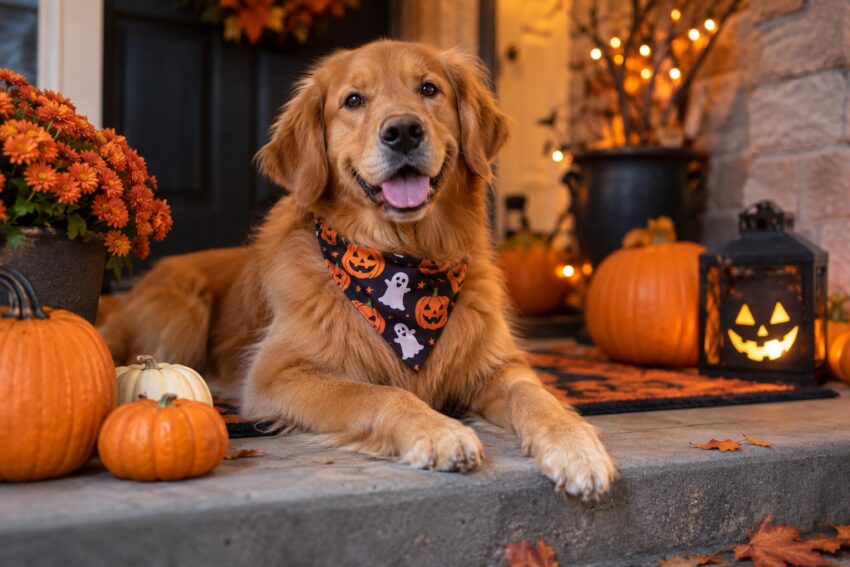
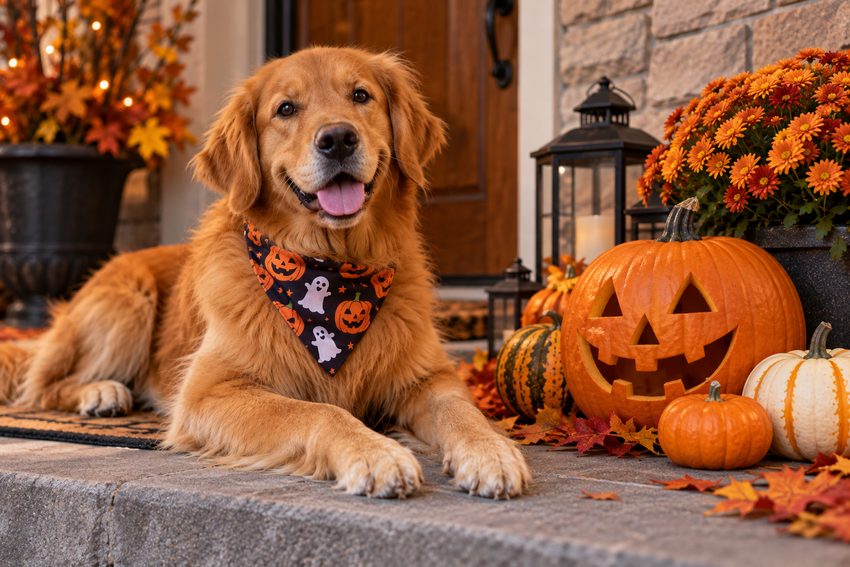
A festive bandana or Halloween-themed collar is a perfectly good alternative. And never leave your dog unattended while they’re wearing a costume.
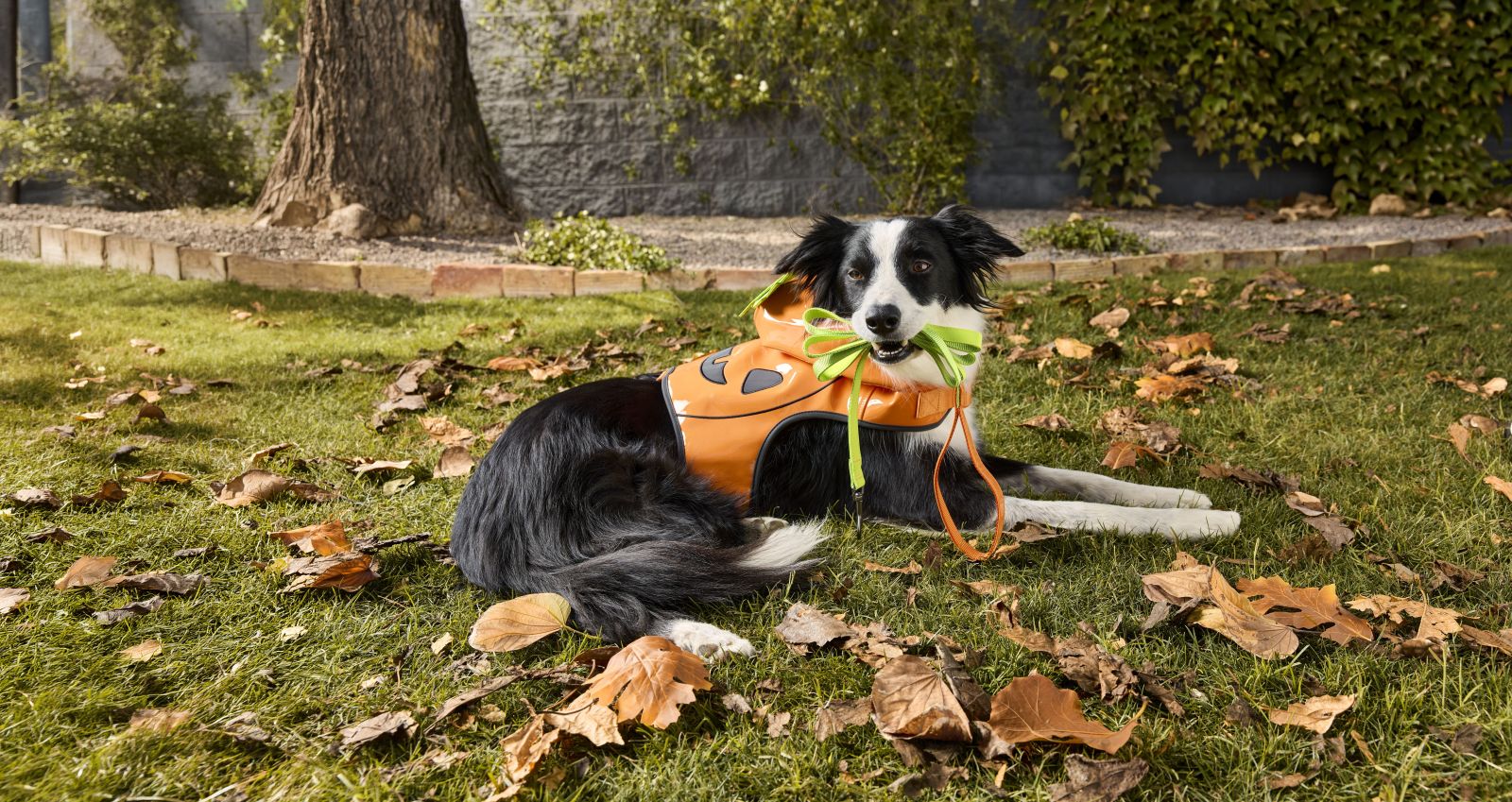
From small pets to larger dog breeds, PetSmart offers costumes and seasonal apparel designed to fit pets of all shapes and sizes. From full costumes to festive apparel and simple collars or accessories, there are options for every pet temperament and comfort level.
7. Keep Halloween Decorations Dog-Friendly
Halloween decorations have gotten pretty elaborate over the years. Between animatronic skeletons, flashing lights, fog machines and giant inflatable monsters, some front yards look like miniature haunted amusement parks.
Fun for humans? Absolutely. Potentially confusing or dangerous for dogs? Also yes.
Some decorations pose physical hazards, while others can frighten dogs enough to trigger an escape attempt.
Pay particular attention to:
- Electrical cords: Keep cords secured and out of reach, especially if your dog likes chewing things they shouldn’t.
- Candles and jack-o’-lanterns: A curious dog can knock over a lit pumpkin or accidentally burn themselves. Battery-operated candles are a safer alternative.
- Fake cobwebs and dangling decorations: These can become entangled around a dog or cause digestive problems if swallowed.
- Small decorative pieces: Plastic spiders, fake eyeballs and miniature skeleton parts can become choking hazards.
- Fog machines and scented decorations: Avoid exposing dogs to concentrated fog, strong fragrances or irritating vapors, particularly if they have respiratory problems.
And be mindful of decorations that suddenly move, scream or light up when someone walks past.
Your dog doesn’t understand that the skeleton lunging out of the bushes is battery-operated. As far as they’re concerned, the yard has developed a serious problem.
8. Take Your Dog for a Walk Before the Halloween Rush
If your neighborhood gets busy with trick-or-treaters, try scheduling your dog’s main walk earlier in the day.
That way, they can get their exercise and bathroom breaks out of the way before the sidewalks fill up with excited kids, unfamiliar costumes and extra traffic.
A good walk can also help some dogs settle down later in the evening.
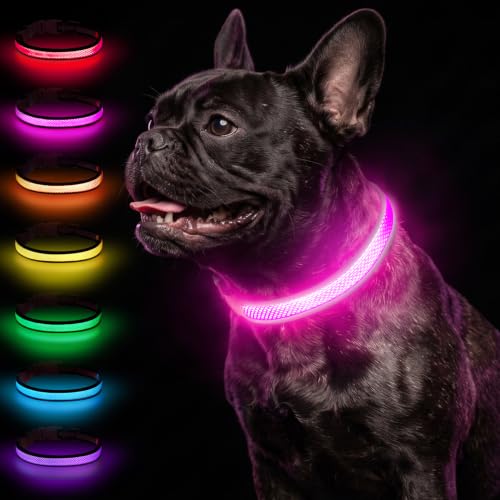
If you do need to take your dog outside after dark, use a sturdy leash and consider reflective gear or an LED collar to make them more visible.
Stick to familiar routes and avoid particularly crowded areas if your dog seems uncomfortable.
And don’t forget to watch the ground. Dropped candy, discarded wrappers and small costume accessories can all become hazards for dogs that like to investigate everything with their mouths.
Never lose sight of your dog after dark. This light up dog collar shines in 7 colors and 3 modes, steady, flashing, and dynamic shift, so you can spot your dog across a dark park and drivers can see them from up to 1000ft away during evening walks
9. Don’t Assume Your Dog Will Recognize People in Costumes
Dogs rely heavily on body language, familiar smells, voices and visual cues to recognize people.
A Halloween costume can change several of those things at once. Someone wearing a large mask, flowing cape or bulky costume might look completely unfamiliar to your dog, even if it’s someone they know well.
Some dogs won’t care. Others may bark, retreat or become defensive. If your dog seems nervous around someone in costume, give them space. Don’t force an introduction or encourage the person to approach.
You can also help your dog adjust to family members’ costumes by letting them see the person before and after putting the costume on. Keep introductions calm and reward relaxed behavior.
The important thing is to let your dog decide how comfortable they are rather than assuming they’ll eventually get over it.
10. Be Careful With Halloween Parties and Gatherings
If you’re hosting a Halloween party, remember that the hazards extend beyond candy and costumes.
Food left on low tables, unattended drinks, dropped snacks and open doors can all create problems.
Ask guests not to feed your dog without permission, even if your pup has perfected the art of looking tragically underfed.
Alcohol, chocolate desserts, foods containing onions or garlic and dishes made with xylitol are particularly concerning.
And while most guests mean well, not everyone understands dog behavior.
Children may want to hug or chase your dog, while adults might try to pet them even when they’re clearly uncomfortable.
If your dog is becoming overwhelmed, give them a break in a quiet room. There’s no rule saying they have to attend the entire party just because they live there.
11. Watch for Signs Your Dog Is Stressed
Some dogs make their feelings about Halloween very obvious. They bark, hide, pace or refuse to go near the front door. Others show much subtler signs of discomfort.
Watch for behaviors such as excessive panting when they’re not hot, repeated lip licking, yawning when they’re not tired, trembling, tucked tails, flattened ears or suddenly refusing treats.
You might also notice your dog becoming unusually clingy or trying to leave the room. These can all indicate stress, especially when several occur together. If your dog seems anxious, reduce their exposure to whatever is bothering them.
That might mean turning off a noisy decoration, moving them away from the door or skipping the neighborhood Halloween walk.
For dogs with significant noise or stranger anxiety, talk to your veterinarian before Halloween about appropriate calming strategies.
And remember that a dog doesn’t have to be visibly terrified to be uncomfortable. Sometimes the kindest thing you can do is let them opt out.
12. Give Your Dog Their Own Halloween Treats
Just because your dog can’t share your Halloween candy doesn’t mean they have to miss out on the treats.
There are plenty of dog-friendly ways to make the holiday special.
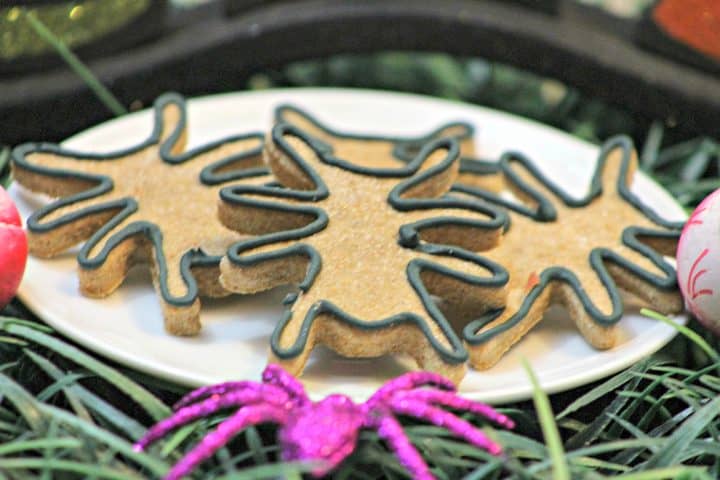
You could offer a few Halloween-themed dog biscuits, make homemade pumpkin treats or fill a puzzle toy with some of their favorite snacks.
Plain canned pumpkin (not pumpkin pie filling) can be a nice ingredient for homemade dog treats, as long as your dog tolerates it.
You can even set up a little indoor treat hunt by hiding a few dog-safe goodies around a room and letting your pup sniff them out.
It’s a fun way to keep them occupied while everyone else is busy with Halloween activities.
Just keep portions reasonable and account for the treats in your dog’s daily food intake.
After all, the goal is to celebrate Halloween, not spend November 1 dealing with an upset stomach.
What to Do If Your Dog Has a Halloween Emergency
Even with careful planning, accidents can happen. The important thing is knowing when to act and who to contact.
If you suspect your dog has eaten something toxic, swallowed a dangerous object or suffered an injury, don’t wait to see whether they improve on their own.
Contact your veterinarian, an emergency animal hospital or a pet poison control service for guidance.
For suspected poisoning, try to have the following information ready:
- Your dog’s approximate weight and age
- What they may have eaten
- How much they might have swallowed
- When the exposure happened
- Any symptoms they’re experiencing
Keep the packaging or take a photo of the ingredients if you can do so safely.
Don’t give medications, activated charcoal products or home remedies without professional guidance. Some substances require very specific treatment, and the wrong intervention can make matters worse.
If your dog is having seizures, struggling to breathe, collapsing or showing other severe symptoms, seek emergency veterinary care immediately.
Final Thoughts: A Safe Halloween Is a Happy Halloween
Halloween doesn’t have to be stressful for dogs, but it does require a little extra attention from us.
Most of the biggest risks are fairly easy to prevent. Keep candy secured, make sure costumes are comfortable, give nervous dogs somewhere quiet to relax and double-check that doors and gates are secure.
I also think it’s worth remembering that not every dog needs to participate in every holiday activity. Some dogs genuinely enjoy meeting trick-or-treaters and showing off their costumes. Others would much rather spend the evening curled up on the couch, completely oblivious to the fact that it’s Halloween.
Both are perfectly fine. The best Halloween celebration for your dog is whichever one keeps them comfortable, safe and happy. And if that involves a few pumpkin treats and an early bedtime, I doubt they’ll complain.